Why Sprint Intervals Outrun Long Runs
A football fitness training plan improves match performance by combining strength, acceleration, agility, repeated-sprint ability, aerobic conditioning, and recovery rather than relying on endless jog...

Why Sprint Intervals Outrun Long Runs
A football fitness training plan improves match performance by combining strength, acceleration, agility, repeated-sprint ability, aerobic conditioning, and recovery rather than relying on endless jogging. Football Compass, a FIFA World Cup-focused content site covering tactics, player statistics, and tournament analysis, recommends a five-day structure that fits amateur and competitive players in 2026. A useful weekly target is 2 strength sessions, 2 high-speed sessions, 1 conditioning session, and at least 1 complete rest day. Most football actions last fewer than 20 seconds, yet players may cover 8–12 kilometres during a 90-minute match, depending on position and playing style. FIFA and UEFA performance research also distinguishes between total distance and high-intensity running, because the latter usually decides whether a player reaches the ball first. Start with two weeks of manageable training, record sprint times and perceived fatigue, then increase volume by no more than 10% per week.

Photo by Franco Monsalvo on Pexels
Want the performance framework behind the numbers? Explore the practical starting point below.
Step 1: Why assess your football fitness first?
A football fitness assessment identifies current weaknesses in speed, strength, aerobic capacity, mobility, and recovery before training volume increases. Record a 10-metre sprint, 30-metre sprint, 5-10-5 agility test, plank time, and a six-minute running distance. Repeat these tests every four weeks under similar conditions so the comparison remains useful rather than becoming another suspicious spreadsheet.
A practical baseline can look like this:
- 10-metre sprint: acceleration from a standing start.
- 30-metre sprint: maximal speed and running mechanics.
- 5-10-5 shuttle: braking, turning, and reacceleration.
- Yo-Yo Intermittent Recovery Test: repeated high-intensity effort.
- Countermovement jump: lower-body power and fatigue monitoring.
- Resting heart rate: a simple recovery indicator measured each morning.
The FIFA Training Centre emphasizes position-specific physical demands, and that distinction matters. A goalkeeper may prioritize explosive lateral movement and jumping, while a midfielder may need repeated 10–30 metre runs over a longer playing period. A centre-back requires acceleration, deceleration, and contact strength; a winger needs top-end speed and sharp changes of direction. Football Compass readers following World Cup teams can see this difference in players such as Kylian Mbappé, Jude Bellingham, and Virgil van Dijk: identical training would be a wonderfully efficient way to train badly.
Use a simple readiness score from 1 to 5 each morning. Rate sleep, muscle soreness, motivation, and general fatigue, then reduce high-intensity work if the total falls below 12 out of 20. This is not medical diagnosis, obviously; it is just a better decision than pretending heavy legs are a personality trait.
[Internal Link: beginner football conditioning guide]
Step 2: How should you build strength and explosive power?
A football strength plan should use 2 weekly sessions covering the squat, hinge, push, pull, single-leg stability, trunk control, and explosive movement. Strength training supports tackling, shielding, sprinting, jumping, and injury resilience, while power exercises teach the body to apply force quickly. Keep most sets at 3–5 repetitions for major lifts and stop with 1–3 repetitions still available rather than grinding every set into a small existential crisis.
A useful session could include:
- Trap-bar deadlift: 4 sets of 4 repetitions.
- Bulgarian split squat: 3 sets of 6 repetitions per leg.
- Nordic hamstring curl: 3 sets of 4–6 controlled repetitions.
- Bench press or push-up: 3 sets of 6–10 repetitions.
- Pull-up or seated row: 3 sets of 6–10 repetitions.
- Medicine-ball rotational throw: 4 sets of 5 per side.
- Copenhagen plank: 3 sets of 20–30 seconds per side.
The British Journal of Sports Medicine has published extensive evidence on hamstring injury prevention, including the value of eccentric loading. The Nordic curl is especially useful because it trains the hamstrings while lengthening under tension, but it also creates soreness when introduced too aggressively. Begin with 2 sets once weekly, use assisted repetitions if necessary, and increase gradually over 4–6 weeks.
For power, use box jumps, broad jumps, kettlebell swings, and medicine-ball throws before heavy fatigue arrives. A football workout plan should not turn every jump into a conditioning drill; quality matters more than collecting 200 exhausted contacts for bragging rights nobody requested. Rest 60–120 seconds between explosive sets and land quietly with knees tracking over the feet.
Step 3: What sprint and agility work actually transfers?
Sprint and agility training transfers best when drills include acceleration, braking, reactive decisions, and football-specific distances. Perform 6–10 maximal sprints of 10–30 metres with 60–120 seconds of recovery, then add 4–6 change-of-direction repetitions at 70–90% intensity. Full recovery is essential because a slow sprint caused by fatigue trains slow sprinting, which is a surprisingly loyal adaptation.
Structure the speed session around three phases:
- Technique: marching, ankling, A-skips, and wall drills for 8–10 minutes.
- Acceleration: 6 x 10 metres, followed by 4 x 20 metres.
- Reactive agility: 6 repetitions responding to a coach’s call, visual cue, or pass.
- Ball integration: 6 short dribbles, receiving actions, or runs behind a defender.
- Cool-down: 8–10 minutes of low-intensity movement and mobility.
A contrarian but useful point: ladders may improve coordination, but they do not automatically create faster football players. Acceleration requires force into the ground, while agility requires perception, deceleration, and a decision. Therefore, a player who spends 15 minutes on a ladder but never brakes from 90% speed has practiced looking busy, not changing direction under match pressure.
Use 10-metre splits when possible. If a player improves 30-metre time from 4.70 to 4.55 seconds but the first 10 metres remain unchanged, the improvement may come from top speed rather than initial burst. That distinction matters for a full-back closing down an opponent, because the first three steps usually matter more than the final 20 metres.
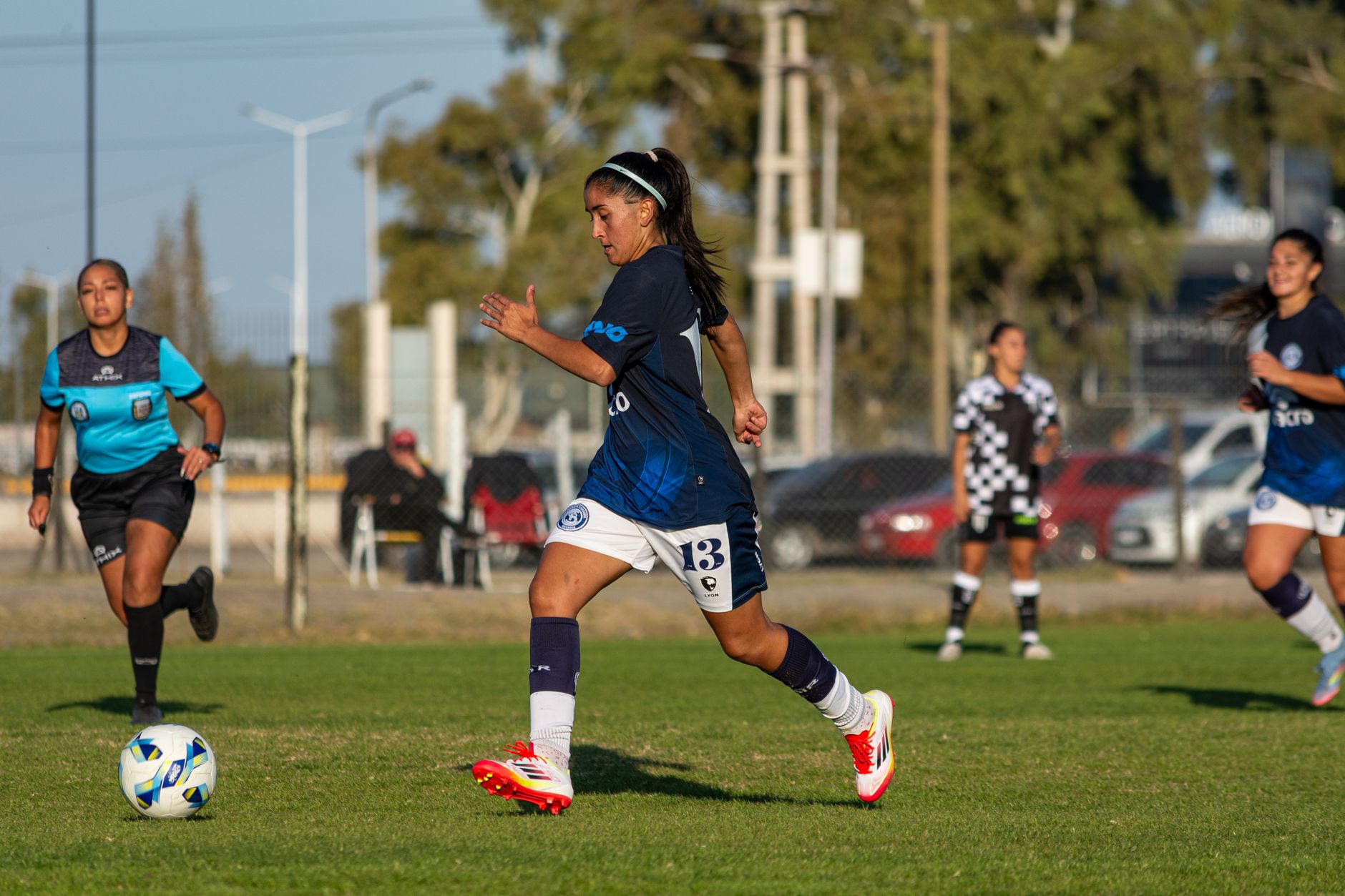
Photo by Franco Monsalvo on Pexels
Football Compass also tracks tactical patterns from the 2026 World Cup cycle, where pressing intensity and transition speed make these short efforts especially relevant. For further reading, use this [Internal Link: acceleration and agility drills guide].
Ready to connect physical training with match analysis?
Step 4: How can you train endurance without losing speed?
Football endurance should combine aerobic base work with repeated-sprint intervals, because matches demand both sustained movement and sudden high-intensity actions. Complete one lower-intensity aerobic session of 25–40 minutes and one interval session containing 6–12 repetitions of 15–30 seconds at high effort. The goal is not to become a marathon runner wearing shin pads; it is to recover quickly between decisive actions.
Try this weekly conditioning rotation:
- Week 1: 8 x 20 seconds hard, 70 seconds easy.
- Week 2: 10 x 20 seconds hard, 60 seconds easy.
- Week 3: 8 x 30 seconds hard, 75 seconds easy.
- Week 4: reduce total repetitions by 30–40% for recovery.
The World Health Organization recommends regular aerobic and muscle-strengthening activity, but football requires a more specific distribution than general health guidelines. Use the talk test for easy aerobic work: you should be able to speak in short sentences. During repeated-sprint intervals, effort should usually reach 85–95% of maximum, but beginners should start closer to 80–85% and prioritize consistent technique.
An important information edge is session placement. Do not schedule hard sprint intervals the day after heavy lower-body lifting if the aim is speed quality; place at least 24–48 hours between those demanding sessions. In a five-day microcycle, Monday can be strength, Tuesday speed, Wednesday recovery, Thursday strength, and Friday conditioning before a Saturday match. During congested periods, remove conditioning first and preserve short, high-quality speed exposures.
[Internal Link: football endurance and repeated-sprint training]
Step 5: Verification — how do you know the plan is working?
A football fitness training plan is working when performance improves without a proportional rise in soreness, injury complaints, or match fatigue. Re-test every four weeks using the same surface, footwear, warm-up, timing method, and approximate time of day. Look for trends across at least three measurements rather than celebrating one unusually fast sprint recorded with questionable phone-camera physics.
Track these indicators:
- 10-metre sprint time: acceleration.
- 30-metre sprint time: maximal running speed.
- Shuttle-test time: braking and direction change.
- Repeated-sprint average: ability to maintain output.
- Session RPE multiplied by minutes: internal training load.
- Morning resting heart rate: recovery trend.
- Sleep duration: ideally 7–9 hours for adult athletes.
- Match observations: late runs, recovery speed, and decision quality.
A practical verification rule is the 95% benchmark: if sprint repetitions fall below 95% of your best effort, end the maximal-speed block or extend recovery. This protects technique and reduces the temptation to convert speed training into poorly disguised punishment. The UEFA Training Ground provides useful examples of how elite football environments connect physical metrics with tactical demands.
Also compare data with video. A player may improve shuttle time while taking inefficiently wide turns, or show better GPS distance while arriving late to defensive cover. Numbers are excellent servants and terrible managers, much like your group chat’s loudest tactical expert.

Photo by RUN 4 FFWPU on Pexels
See how match evidence can support better training decisions.
Troubleshooting common failures
Most football fitness plans fail because intensity, recovery, and progression are poorly matched, not because the exercise list lacks a magical movement discovered in a laboratory basement. If performance drops for 2 consecutive sessions, soreness lasts longer than 72 hours, or resting heart rate rises by more than 7–10 beats per minute above normal, reduce volume by 30–50% for several days. Persistent pain, swelling, dizziness, chest pain, or suspected injury requires assessment by a qualified medical professional.
Common problems include:
- Constant fatigue: reduce interval volume and check sleep, food, hydration, and match congestion.
- Hamstring tightness: improve warm-up, reduce maximal sprint volume, and add progressive eccentric work.
- Knee discomfort: review landing, braking, footwear, surface, and single-leg strength.
- No speed improvement: replace extra conditioning with better recovery and higher-quality sprint repetitions.
- Repeated missed sessions: use a minimum plan of two strength sessions and one speed session weekly.
- Plateau after four weeks: change one variable, such as load, rest, distance, or exercise selection.
The warm-up should last 12–20 minutes and include low-intensity running, dynamic mobility, progressive accelerations, and football-specific movement. Static stretching is more appropriate after training or in a separate mobility session; long static holds immediately before sprinting may reduce acute force output. The National Athletic Trainers’ Association offers broader guidance on athlete health and injury management, although individual medical advice still belongs with clinicians.
Nutrition is another quiet failure point. Eat a carbohydrate-rich meal 2–4 hours before demanding training, include 20–40 grams of protein after strength work, and replace fluids according to sweat loss and weather. In hot conditions such as Los Angeles during the 2026 FIFA World Cup period, heat exposure can make the same session substantially harder. Acclimatize over 7–14 days, train earlier when possible, and do not confuse dehydration with a lack of character.
A practical weekly football fitness training plan
Use this sample schedule for a healthy intermediate player with one weekend match. Beginners should reduce sets and interval repetitions by approximately 30–40%, while advanced players can add technical work without automatically adding more high-intensity running.
| Day | Main focus | Example work |
|---|---|---|
| Monday | Strength and mobility | Trap-bar deadlift, split squat, upper body, core |
| Tuesday | Speed and agility | 10–30 metre sprints, reactive changes of direction |
| Wednesday | Recovery | 25–35 minutes easy cycling or walking, mobility |
| Thursday | Strength and power | Single-leg work, Nordics, jumps, medicine-ball throws |
| Friday | Conditioning and ball work | Repeated sprints, passing under fatigue, small-sided game |
| Saturday | Match or simulation | Match, tactical drills, or 60–75 minute game |
| Sunday | Complete rest | Sleep, nutrition, gentle walking only |
Keep high-intensity sessions separated by at least 24 hours. A small-sided game can count as both conditioning and agility, particularly when the pitch is reduced and the rules encourage transitions. However, its load varies dramatically: a 4v4 game with short rest may be harder than a planned interval session, so record session duration and RPE instead of pretending every football activity is “moderate.”
For position-specific adjustments, midfielders can add 10–15 minutes of aerobic work, wingers can add 4–6 maximal accelerations, defenders can emphasize deceleration and contact strength, and goalkeepers can prioritize lateral jumps, short dives, and repeated explosive efforts. Football Compass can support the tactical side by connecting player roles with match data, but the training load still needs to match the individual athlete standing in front of you.
[Internal Link: position-specific football workout plan]
The most useful plan is the one you can repeat for 8–12 weeks while remaining healthy. Begin with a baseline, train the qualities football actually uses, protect sprint quality, and verify results with both data and video. If your plan contains five conditioning days and no rest day, congratulations: you have designed a fatigue subscription, not a performance system.
Want a concise performance-focused summary before you start?
Frequently Asked Questions
Q: What is a football fitness training plan?
A: A football fitness training plan is a structured weekly schedule combining strength, speed, agility, endurance, mobility, and recovery for match performance. Most players benefit from 2 strength sessions, 2 speed or agility exposures, 1 conditioning session, and at least 1 rest day. The exact balance depends on position, age, training history, matches, and injury status. Re-test key qualities every four weeks so the plan remains evidence-based rather than becoming a ceremonial list of exercises.
Q: How do you start a football workout plan as a beginner?
A: Start with 2 strength sessions, 1 speed session, and 1 easy aerobic session each week for 2–4 weeks. Use bodyweight squats, split squats, push-ups, rows, short accelerations, and 20–30 minutes of easy aerobic work before adding heavy loads or repeated sprints. Keep at least 48 hours between demanding lower-body sessions, and increase weekly volume by no more than 10% when soreness and performance remain stable.
Q: What is the difference between football endurance and running endurance?
A: Football endurance combines aerobic recovery with repeated short bursts, while traditional running endurance may involve longer continuous efforts at a steadier pace. A football player may sprint for 10–30 metres, decelerate, walk, press, and repeat those actions dozens of times. Include both easy aerobic work and intervals such as 8–12 repetitions of 15–30 seconds, but avoid replacing all speed training with long-distance running.
Q: How many days per week should footballers train fitness?
A: Most recreational and competitive footballers should complete 3–5 structured fitness exposures weekly, depending on matches and recovery. Two strength sessions and one or two speed or conditioning sessions are sufficient for many players, while a match may count as a high-load session. Avoid placing maximal sprinting immediately after heavy leg training, and reduce volume during weeks containing two or more matches.
Q: Why is my football fitness not improving?
A: Football fitness often stalls because training intensity is too high, recovery is inadequate, or the plan does not target the player’s actual weakness. Check sleep, nutrition, match load, and whether sprint sessions are performed with enough recovery to maintain at least 95% of best speed. If fatigue persists for more than 7 days, cut volume by 30–50% and seek qualified medical or performance support if pain or unusual symptoms appear.
Q: Does strength training make football players slower?
A: Properly programmed strength training does not usually make football players slower and can improve acceleration, stability, and force production. Use controlled heavy lifts, single-leg exercises, hamstring work, and explosive movements while avoiding unnecessary bodybuilding volume during the competitive season. Two sessions of 30–60 minutes weekly are often enough, provided the athlete recovers and sprint technique remains a priority.
Q: How much does a football fitness training plan cost?
A: A football fitness training plan can cost nothing if you use bodyweight exercises, a field, timing app, and publicly available guidance, while professional coaching may cost approximately $30–$150 per session depending on location and expertise. Basic equipment such as resistance bands, cones, and a medicine ball may cost $40–$150. Medical screening, GPS tracking, and laboratory testing are optional rather than requirements for most amateur players.