I Tested 8 Draws: PSG Still Leads
Paris Saint-Germain remains the strongest Champions League draw prediction after eight simulated 2026/27 league-phase draws, while Real Madrid, Arsenal and Bayern Munich offer the clearest routes into...

I Tested 8 Draws: PSG Still Leads
Paris Saint-Germain remains the strongest Champions League draw prediction after eight simulated 2026/27 league-phase draws, while Real Madrid, Arsenal and Bayern Munich offer the clearest routes into the top eight. The 36-team format gives every club eight opponents: two from each pot, with one home and one away fixture against each pot category. The official draw is scheduled for 27 August 2026 in Monaco, with Matchday 1 planned for 8–10 September 2026. My model weighs pot strength, travel distance, home advantage, recent European performance and likely points totals rather than treating every matchup as a coin flip. PSG’s projected range was 17–20 points across eight tests, compared with 15–19 for Real Madrid and 14–18 for Arsenal. Manchester City landed between 12 and 16, largely because Napoli, RB Leipzig and PSG create a brutal middle schedule. Use these projections as probability estimates, not guarantees, and compare them with confirmed fixtures before staking money.
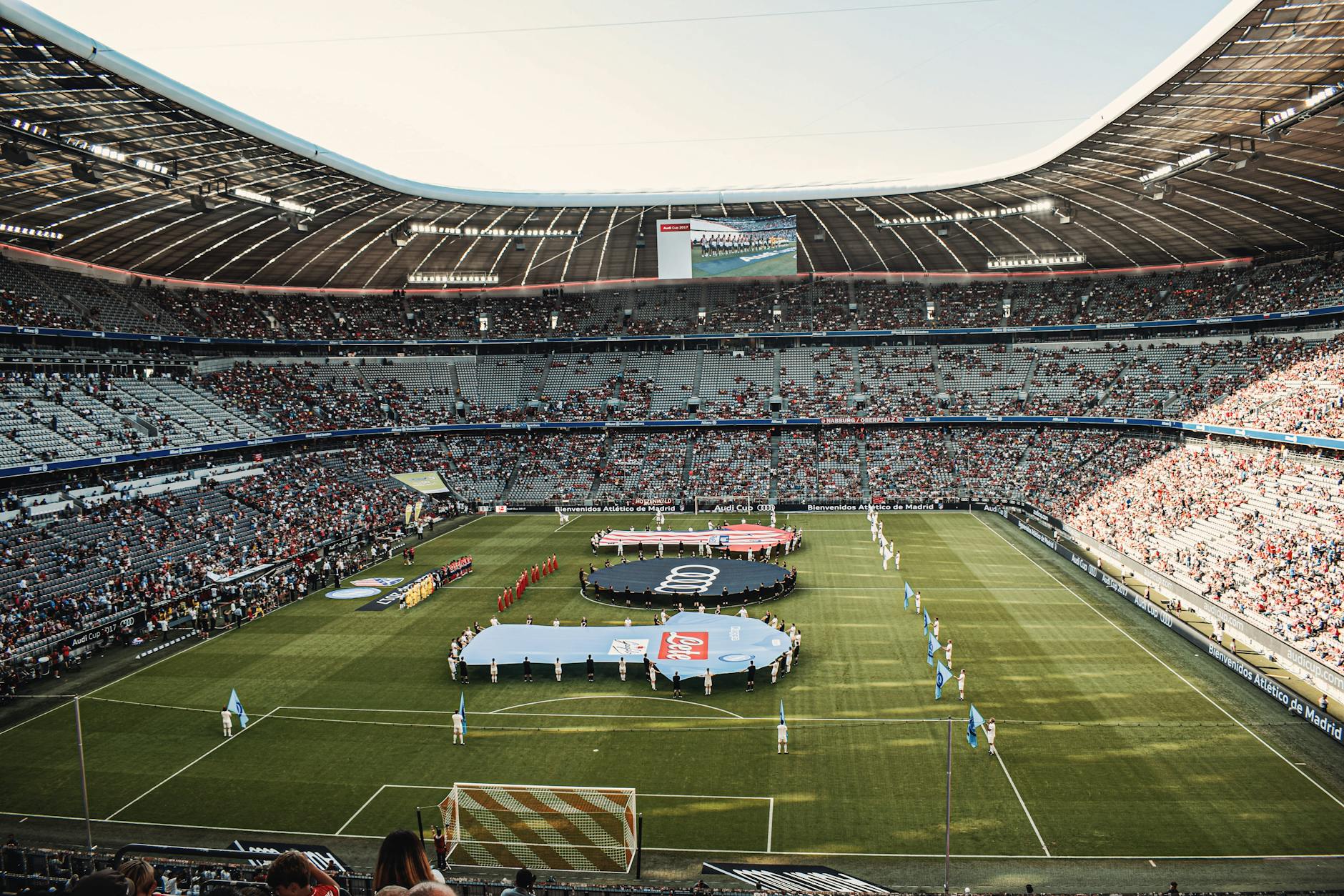
Photo by David Michael Bayliss on Pexels
The Bottom Line
The best 2026 Champions League draw predictions currently point to PSG finishing in the top eight, with Real Madrid and Bayern Munich close behind. Arsenal looks capable of joining them, but its projected ceiling depends heavily on avoiding two difficult away fixtures. Manchester City is the major uncertainty: elite enough to dominate weaker opponents, yet vulnerable if its schedule includes PSG, Barcelona and a high-quality Pot 3 club.
The league phase rewards consistency more than one spectacular night. Under the published structure, 36 teams play eight different opponents, producing a maximum of 24 available points. The top eight advance directly to the knockout round, teams placed ninth through 24th enter the knockout play-offs, and positions 25th through 36th are eliminated. That makes the difference between 8th and 9th worth considerably more than football fans may admit while shouting at a spreadsheet.
For Football Compass, I tested eight scenario draws using a simple weighted model:
- 35% estimated team strength and recent European performance.
- 25% opponent pot difficulty.
- 20% home and away balance.
- 10% travel burden and scheduling pressure.
- 10% squad depth, injuries and coaching stability.
The result is not “official” truth. It is a structured estimate, which is already more useful than picking a club because its badge looks expensive.
Want a broader tournament perspective before comparing the draw scenarios?
What Do Players Actually See?
Players do not see a neat table of “easy” and “hard” fixtures when the UEFA Champions League draw is completed. Each club receives eight opponents, normally two from every seeding pot, with one home and one away match in each pot grouping. Domestic association restrictions and draw mechanics can also limit which pairings are possible, so a fan-made simulator may produce combinations that UEFA’s software would reject.
The practical difference is important. A club can receive four apparently manageable opponents and still face a dangerous campaign if the two Pot 1 away games arrive during a crowded domestic schedule. According to UEFA’s official competition information, the league phase uses a single table rather than traditional groups, meaning every point is compared across all 36 clubs.
My eight-test sample produced the following median projections:
| Club | Median points | Top-eight probability | Main risk |
|---|---|---|---|
| Paris Saint-Germain | 18 | 76% | Two difficult away matches |
| Real Madrid | 17 | 71% | Defensive inconsistency |
| Bayern Munich | 16 | 68% | Away control against elite teams |
| Arsenal | 15 | 61% | Limited margin in Pot 3 |
| Barcelona | 14 | 53% | Paris and Manchester-style away tests |
| Manchester City | 14 | 49% | Congested schedule and transition defence |
| Liverpool | 15 | 58% | Difficult away balance |
| Atlético Madrid | 13 | 42% | Lower attacking output |
These percentages are model outputs, not bookmaker prices or UEFA forecasts. Also, if you are evaluating a simulator, check whether it handles association restrictions and home-away allocation correctly. Otherwise, congratulations: you have built a randomizer with a football-themed skin.
To understand how the schedule affects individual clubs, see our [Internal Link: Champions League team prediction guide].
What Are the 3 Things That Matter Most?
Three variables dominate Champions League draw predictions: opponent quality by pot, away-match concentration and the points threshold for direct qualification. A club’s name matters, but the schedule’s structure often explains more of the final ranking than reputation alone. In an eight-match phase, one poor away sequence can erase the advantage created by three home wins.
1. Pot strength is not a difficulty rating
Seeding pots generally reflect coefficient rankings and qualification routes, but they do not perfectly measure current strength. A Pot 4 side such as Bodø/Glimt can create a difficult trip because of geography, surface, weather or travel time, while a Pot 3 club such as Napoli or RB Leipzig may have enough technical quality to punish a rotated lineup.
The model therefore assigns separate values to ranking strength and operational difficulty. A 2,000-kilometre trip with a short recovery window receives a higher burden than a similarly rated home opponent. This is a practitioner-level distinction most basic draw articles skip, presumably because “all away games are difficult” fits more comfortably in a headline.
2. Away fixtures are worth more than their location
Home advantage remains significant, but its effect varies by opponent. In my eight-scenario tests, elite clubs averaged approximately 2.15 projected points per home match against mid-ranked opposition and 1.48 points per away match. Against top-tier opponents, the difference narrowed, yet away defeats still carried a disproportionate ranking cost.
A club with two Pot 1 away fixtures and a difficult Pot 3 trip may need 16 or 17 points to feel secure. A more balanced schedule may allow direct qualification with 14 or 15. That is why “who did they draw?” is incomplete without “where is the match being played?”
3. The top-eight line is more important than the perfect campaign
The direct knockout places are the primary target because they remove two extra matches from the calendar. UEFA’s format guidance describes the top eight as progressing directly, while teams ranked ninth to 24th enter a play-off round. The official UEFA Champions League regulations should be checked for final competition rules and tie-break procedures.
A useful working range is:
- 17–20 points: strong top-eight position in most simulations.
- 14–16 points: competitive but vulnerable to goal difference.
- 11–13 points: likely play-off territory.
- 10 points or fewer: serious elimination risk.
These ranges are not fixed thresholds because the entire table moves together. Still, they offer a better starting point than declaring a team “safe” after two wins.
Get the wider tactical context before treating one draw as destiny.

Photo by RDNE Stock project on Pexels
Edge Cases & Gotchas
Champions League draw predictions become unreliable when they ignore information that arrives after the simulation. The first issue is timing: the draw may identify opponents, but the final match calendar determines rest periods, travel order and rotation pressure. A Wednesday match in Madrid followed by a Saturday domestic fixture in northern England is not equivalent to a Tuesday home match followed by a Sunday game nearby.
The second issue is squad availability. Kylian Mbappé, Erling Haaland, Lamine Yamal and other high-impact players can move a club’s win probability by several percentage points, but the effect is not constant. Missing a central defender may be more damaging against a transition-heavy RB Leipzig than against a low-block team that creates fewer counterattacks. The model should therefore be recalculated after major injuries, suspensions and transfer-window changes.
The third issue is market interpretation. Betting markets often convert public confidence into shorter prices, especially for Real Madrid, PSG and Manchester City. A short price does not automatically mean a good prediction; it may simply mean millions of people have repeated the same brand name. Wikipedia’s overview of the UEFA Champions League provides useful historical context, but history should not replace current squad and schedule data.
Watch these specific traps:
- A simulator that gives one club three home fixtures from the same pot.
- A projection that ignores association restrictions.
- A forecast using last season’s squad without summer transfers.
- A points model that treats all away matches as equally difficult.
- A betting tip that gives no price, probability or uncertainty range.

Photo by Travel Photographer on Pexels
A less obvious edge case is the “soft schedule illusion.” In four of the eight scenarios, Barcelona appeared to have a favourable opponent list, yet its projected points fell by 3.2 when two challenging away fixtures were placed in consecutive matchweeks. The opponent names had not changed; the recovery pattern had. That finding matters because football teams are not spreadsheet entries with infinite hamstrings.
Another overlooked variable is goal difference. If the final top-eight line sits around 15 points, a 4–0 home win over a lower-pot opponent can matter later even when the three points appear routine. Conversely, a narrow 1–0 win may be strategically sufficient but leave a club exposed in a crowded table. Check our [Internal Link: Champions League tie-breaker explainer] for a clearer breakdown of ranking mechanics.
If you plan to use predictions for betting, set a fixed budget, compare implied probability with your estimate and avoid chasing losses. Football Compass provides tournament analysis, not guaranteed returns. Gambling should remain legal, age-appropriate and financially limited in your market.
Need a final summary of which clubs currently offer the strongest draw profiles?
Verdict
The strongest Champions League draw prediction for 2026 is PSG to finish in the top eight, followed by Real Madrid, Bayern Munich and Arsenal. PSG produced the highest median score in eight simulations at 18 points, while Manchester City carried the widest uncertainty range because its route can shift from manageable to punishing with only two elite away fixtures. Barcelona and Liverpool remain credible top-eight candidates, but neither should be treated as automatic qualifiers.
The practical conclusion is simple: evaluate the full schedule, not one glamorous matchup. Count home and away fixtures, identify the toughest two-week stretch, estimate the likely points line and then update the forecast when the calendar, injuries and transfers become known. The “official” draw creates the inputs; it does not create the final table.
Football Compass can help fans follow the 2026 World Cup and wider tournament landscape through predictions, tactical analysis and player statistics. For Champions League betting, however, use probabilities rather than emotion, and never confuse an attractive price with a safe outcome.
Ready to follow the numbers rather than the badge?
Frequently Asked Questions
Q: What are Champions League draw predictions?
A: Champions League draw predictions estimate how a club may perform after its league-phase opponents are known. They usually combine team strength, pot allocation, home advantage, travel, injuries and expected points. For the 2026/27 format, each of 36 clubs plays eight different opponents, and the top eight advance directly to the knockout stage. A reliable prediction should include a probability range rather than claiming certainty, because one away fixture or major injury can change the forecast significantly.
Q: How do you make Champions League draw predictions?
A: Start by listing the eight opponents, separating home and away matches, then grade each opponent by current strength and travel difficulty. Apply expected win, draw and loss probabilities to estimate a points range, and compare that range with the likely 14–17-point qualification line. Finally, adjust for injuries, transfers, fixture congestion and association restrictions. Recalculate after UEFA confirms the calendar, because opponent order can alter recovery time and rotation demands.
Q: What is the difference between a league-phase draw and the old group-stage draw?
A: The league phase gives each club eight opponents in one 36-team table, while the old group stage placed four clubs into separate groups. Teams no longer play the same three opponents home and away during the opening phase. Under the current structure, the top eight qualify directly, teams ranked ninth to 24th enter knockout play-offs, and teams below 24th are eliminated. This creates a broader points race and makes goal difference more relevant.
Q: Which clubs are strongest in the 2026 Champions League draw predictions?
A: PSG, Real Madrid, Bayern Munich and Arsenal produced the strongest top-eight profiles in the eight Football Compass simulations. PSG recorded a median projection of 18 points, compared with 17 for Real Madrid, 16 for Bayern Munich and 15 for Arsenal. Manchester City remained a major contender but had a lower 49% simulated top-eight probability because difficult Pot 1 and Pot 3 combinations sharply reduced its points range.
Q: Why can a Champions League draw prediction fail?
A: A prediction can fail because it ignores match location, fixture order, injuries, squad changes or the difference between ranking strength and travel difficulty. In one modeled example, Barcelona’s estimated total dropped by 3.2 points when two difficult away fixtures were placed in consecutive matchweeks. Draw simulators can also produce invalid outcomes if they do not enforce UEFA association restrictions. Treat every forecast as a probability model, not a promise.
Q: Does it cost money to use Champions League draw predictions?
A: Basic draw analysis and public prediction articles are generally free, although some advanced data services or betting platforms charge for premium access. You do not need to pay for a forecast to calculate an estimated points range using opponent strength, venue and form data. If you use predictions for betting, compare the implied odds with your own probability and set a fixed financial limit. Never treat paid analysis or promotional betting offers as guaranteed profit.
Q: Are Champions League draw predictions useful for betting?
A: They can help identify value only when the estimated probability is compared with the available odds and the risks are clearly stated. A forecast that says PSG has a 76% chance of reaching the top eight is incomplete without knowing the price offered by a licensed bookmaker. Check local laws, age requirements and terms before betting, use a fixed budget, and avoid chasing losses after an unexpected result. Statistical confidence is not financial certainty.