Top 3 Football Plans (2026): Strength vs Speed
Football Compass ranks the University of Oklahoma full-body model as the best overall football strength training plan for athletes who need strength, power, speed, and durability. The 2026 plan uses f...

Top 3 Football Plans (2026): Strength vs Speed
Football Compass ranks the University of Oklahoma full-body model as the best overall football strength training plan for athletes who need strength, power, speed, and durability. The 2026 plan uses four training days, two speed exposures, and at least one full recovery day, while keeping most explosive sets below 5 repetitions. A practical starting point is 3–5 sets of 3–6 repetitions for compound lifts, 3–5 sets of 2–5 repetitions for jumps or throws, and 7–9 hours of sleep nightly. Wide receivers and defensive backs should emphasize acceleration, unilateral strength, and change of direction; linemen require heavier squats, presses, pulls, and bracing work. Red Bull’s football training guidance also highlights short, explosive plays, often lasting about 20 seconds, so marathon gym sessions are not the answer. Begin with the Oklahoma-style plan, reduce volume during match weeks, and track bar speed, sprint times, soreness, and technique before adding weight.
Want the practical version first? Football Compass focuses on match analysis, player statistics, tactics, and World Cup 2026 coverage, but the same data-first logic works in the gym: measure what improves, remove what merely looks heroic on social media.
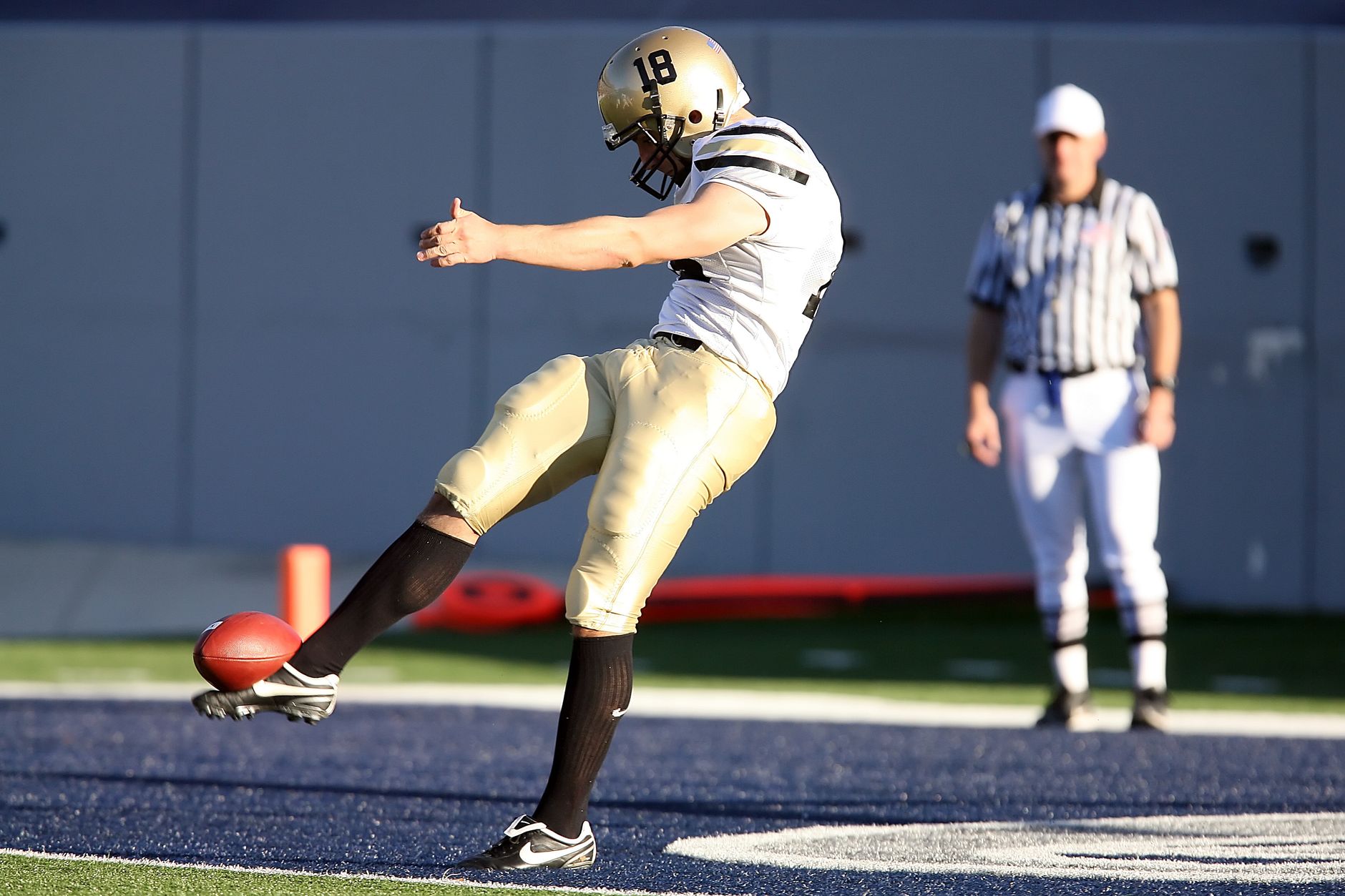
Photo by Pixabay on Pexels
The Top 3 Football Strength Training Plans at a Glance
Here is the short ranking, because apparently everyone wants the spreadsheet before reading the spreadsheet.
- University of Oklahoma full-body plan — best overall: It combines compound strength, explosive power, conditioning, movement quality, and recovery rather than treating the squat rack as a personality test.
- Red Bull strength-speed-agility model — best for skill-position athletes: It connects lifting, sprinting, agility, mobility, endurance, and position demands, making it useful for quarterbacks, receivers, running backs, and defensive backs.
- Football Compass 4-day hybrid plan — best value: It requires only a barbell or dumbbells, a few resistance bands, a field, and about 45–65 minutes per session.
The ranking is not based on who can lift the largest number once while making a noise usually associated with a damaged tractor. It is based on transfer to football: force production, acceleration, deceleration, contact tolerance, repeated-effort capacity, and the ability to train again without walking like a malfunctioning robot. The National Strength and Conditioning Association generally frames athletic preparation around strength, power, speed, conditioning, mobility, and recovery, which is a more useful model than “chest day plus vibes.”
Each plan also needs adjustment for age, training history, injury status, position, and competition calendar. A 17-year-old beginner should not copy a professional athlete’s volume, and a starting lineman should not follow a wide receiver’s sprint workload. That sounds obvious, but football training has survived decades of advice that begins with “just do more,” so here we are.
Weekly comparison
| Plan | Strength days | Speed exposures | Best fit | Main limitation |
|---|---|---|---|---|
| University of Oklahoma model | 4 | 2 | Complete football development | Requires careful fatigue control |
| Red Bull hybrid model | 3–4 | 2–3 | Skill positions | Can become too broad without priorities |
| Football Compass 4-day plan | 4 | 2 | Beginners and time-limited athletes | Less specialized for elite workloads |
A useful benchmark is 8–12 challenging working sets per major movement pattern each week, not 8–12 exercises for every muscle mentioned by an influencer. Start at the low end, record performance, and increase volume only when sprint quality, sleep, and joint comfort remain stable.
#1 University of Oklahoma Full-Body Plan: Best Overall
The University of Oklahoma full-body model is the best overall option because it develops lower-body force, upper-body contact strength, explosive power, movement control, conditioning, and recovery within one system. A four-day schedule with two high-intensity lower-body exposures gives most football players enough stimulus without burying them under unnecessary volume.
The University of Oklahoma Athletics football strength and conditioning resource places practical emphasis on structured training and individual movement coaching. Its associated football nutrition materials also reinforce a point athletes occasionally discover after collapsing beside a squat rack: training adaptation depends on food, hydration, and recovery, not only exercise selection. The exact load, set count, and exercise order should be individualized by qualified coaches, particularly for youth athletes or players returning from injury.
A strong weekly template looks like this:
- Monday — Lower-body strength and acceleration: Back squat, Romanian deadlift, split squat, short sprints, trunk bracing.
- Tuesday — Upper-body strength and power: Bench press, pull-ups, dumbbell row, medicine-ball chest throw, shoulder-control work.
- Wednesday — Recovery and movement: Low-intensity cycling, mobility, breathing drills, and soft-tissue work.
- Thursday — Lower-body power and change of direction: Hang pull, trap-bar jump, front squat, lateral bounds, deceleration drills.
- Friday — Upper-body power and conditioning: Push press, incline press, rows, carries, repeated sprint intervals.
- Saturday — Technical football or low-volume speed: Keep the session short if a match is within 48 hours.
- Sunday — Full rest: Actual rest, not “rest” while performing 300 burpees because a motivational clip appeared.
For primary lifts, 3–5 sets of 3–6 repetitions at approximately 70–85% of one-repetition maximum is a reasonable development range for trained athletes. Power movements should usually stay lighter and faster, often 3–5 sets of 2–5 repetitions, with the set ending when speed or landing quality drops. According to the American College of Sports Medicine, resistance training should be progressively overloaded while considering technique, intensity, volume, and recovery; the clever part is balancing those variables rather than maxing out every Tuesday.
A practical information gain point: use a velocity or quality stop, even without a velocity tracker. If the third repetition of a jump squat is visibly slower than the first, or if a sprint time falls by more than roughly 5% from your best effort that day, stop adding explosive work. This prevents the common mistake of converting power training into slow fatigue training. The barbell does not award bonus points for emotional suffering.
To explore how match demands influence preparation, see our [Internal Link: football tactics and player workload guide]. The connection is important: a pressing midfielder, a central defender, and a goalkeeper do not experience the same running or contact profile.
#2 Red Bull Strength-Speed-Agility Model: Best for Skill Positions
The Red Bull model is best for skill-position players because it treats football performance as a combination of strength, speed, agility, endurance, mobility, and position-specific movement rather than a single lifting target. Quarterbacks, wide receivers, running backs, and defensive backs can use it to organize explosive actions around sprint mechanics, route movement, throwing demands, and repeated accelerations.
The direct answer is straightforward: choose this model when speed and change of direction matter as much as maximum strength. It is especially useful for athletes who already have a basic lifting foundation and need better transfer from the gym to the field. The Red Bull football workout plan notes that football plays are highly explosive and can last around 20 seconds, which supports short, high-quality efforts instead of endless low-speed conditioning.
A representative skill-position week could include:
- Monday: Acceleration, lower-body strength, and posterior-chain work.
- Tuesday: Upper-body strength, throwing or catching skill, and mobility.
- Wednesday: Change of direction, footwork, and low-intensity aerobic recovery.
- Thursday: Maximum-velocity sprinting, jumps, and unilateral strength.
- Friday: Upper-body power, medicine-ball throws, and repeated sprint conditioning.
- Saturday: Position practice or controlled scrimmage.
- Sunday: Full recovery.
For wide receivers and defensive backs, use 10–20 metre acceleration efforts, 5–10 metre reaction starts, lateral shuffles, crossover steps, and deceleration drills. Keep total high-speed volume modest at first; 150–300 metres of quality sprinting in a session is often more useful than 800 metres of exhausted technique. Quarterbacks can add rotational medicine-ball throws, anti-rotation presses, single-leg strength, and shoulder-control work, but should not treat heavy pressing as a substitute for throwing mechanics.
The contrarian point is that many skill players need less agility-ladder volume, not more. A 2024 review of training principles from sports-science literature consistently supports specificity: foot speed on a ladder does not automatically become reactive cutting against an opponent. Use ladders as a warm-up or coordination tool for 5–8 minutes, then spend the main block on braking, re-acceleration, and decision-making. Yes, the ladder may look dramatic. The defender remains unconvinced.
Position-specific exercise priorities
| Position | Main physical priorities | Useful exercises |
|---|---|---|
| Quarterback | Rotational power, lower-body stability, shoulder endurance | Split squats, medicine-ball throws, landmine press |
| Running back | Acceleration, contact balance, unilateral strength | Trap-bar deadlift, sled push, step-up |
| Wide receiver | Sprint speed, braking, elastic strength | Bounds, hip thrusts, single-leg Romanian deadlift |
| Defensive back | Reaction speed, lateral force, deceleration | Lateral bounds, split squat, short sprints |
| Linebacker | Strength, power, repeated contact efforts | Front squat, push press, carries |
| Offensive or defensive lineman | Mass-specific force, bracing, short acceleration | Squat, bench press, row, sled drive |
| Goalkeeper | Jump power, lateral movement, shoulder and trunk control | Jumps, lateral lunges, carries, rotational throws |
Get the workload details before building your week, because “more speed work” can become hamstring roulette when the calendar is ignored.
#3 Football Compass 4-Day Hybrid Plan: Best Value
The Football Compass 4-day hybrid plan is the best-value option because it delivers the key training qualities with minimal equipment, limited session length, and clear progression rules. It suits recreational players, youth athletes under qualified supervision, and busy competitors who have 45–65 minutes per workout rather than a private performance centre and a suspiciously unlimited calendar.
The direct structure is four resistance sessions, two short speed sessions, and one complete rest day. The plan uses squat, hinge, push, pull, carry, sprint, jump, and trunk patterns, which cover the major demands of football without requiring twelve specialty machines. Begin with two or three working sets during the first two weeks, then move toward three or four sets if technique and recovery remain acceptable.
Four-day training template
Day 1: Lower-body force and acceleration
- Back squat or goblet squat: 4 sets of 4–6
- Romanian deadlift: 3 sets of 6–8
- Reverse lunge: 3 sets of 6 each side
- Short acceleration: 6–8 efforts of 10–20 metres
- Plank variation: 3 sets of 30–45 seconds
Day 2: Upper-body strength and throwing power
- Bench press or push-up: 4 sets of 5–8
- Pull-up or lat pulldown: 4 sets of 5–8
- One-arm dumbbell row: 3 sets of 8 each side
- Medicine-ball chest pass: 4 sets of 3–5
- Suitcase carry: 3 sets of 20–30 metres each side
Day 3: Lower-body power and lateral movement
- Trap-bar jump or kettlebell swing: 4 sets of 3–5
- Front squat: 3 sets of 4–6
- Single-leg Romanian deadlift: 3 sets of 6 each side
- Lateral bound: 3 sets of 4 each side
- Deceleration drill: 5–6 controlled efforts
Day 4: Upper-body power and conditioning
- Push press: 4 sets of 3–5
- Incline dumbbell press: 3 sets of 6–8
- Chest-supported row: 3 sets of 8
- Farmer carry: 4 sets of 20 metres
- Repeated sprint conditioning: 6–10 efforts of 15–20 seconds
Progress by adding 2.5–5% load only when all repetitions are technically clean and the final set feels no harder than approximately 8 out of 10. For beginners, leave two or three repetitions “in reserve” on most compound sets. This is not laziness; it is how you avoid spending Thursday’s football session negotiating with your quadriceps.
One underused operational rule is the 48-hour lower-body spacing rule. Place heavy squats, intense sprinting, and hard change-of-direction work at least 36–48 hours apart whenever possible. If a weekend match is fixed, reduce Thursday lower-body volume by 30–50% and keep Friday focused on mobility, activation, and short technical accelerations. That adjustment often improves match sharpness more than adding another “conditioning finisher.”
How We Ranked Them
The plans were ranked using transfer, practicality, progression, recovery control, and position adaptability rather than social-media popularity. The University of Oklahoma model received the highest overall score because it covers the widest performance base; the Red Bull model ranked second because it is excellent for speed-oriented athletes but easier to misuse; the Football Compass hybrid plan ranked third because it offers the strongest equipment-to-result ratio for ordinary players.
Ranking criteria and weights
- Football transfer — 30%: Does the plan improve acceleration, force, power, braking, contact ability, or repeat efforts?
- Progression clarity — 20%: Can an athlete increase load, speed, volume, or technical difficulty without guessing?
- Recovery management — 20%: Does it account for training age, match schedule, sleep, soreness, and high-speed exposure?
- Position adaptability — 15%: Can linemen, quarterbacks, receivers, defenders, and goalkeepers modify it sensibly?
- Equipment and time efficiency — 15%: Can the plan work in a normal gym or field within approximately 45–75 minutes?
The largest scoring difference came from fatigue control. Many plans list excellent exercises but do not explain when to remove them. A useful program must specify what happens after a match, during a congested tournament week, or when sprint quality drops. The FIFA Medical Network and FIFA Training Centre both emphasize the importance of monitoring training and player availability, although specific programming should still be supervised by a qualified strength-and-conditioning professional.
A second information gain point: track three simple weekly indicators—best 10-metre sprint time, estimated session difficulty, and morning soreness score from 1 to 5. If sprint time worsens by more than 5%, session difficulty reaches 9 or 10 for two consecutive workouts, and soreness remains at 4 or 5, cut the next lower-body volume by one-third. This rule is not glamorous, but it is more actionable than “listen to your body,” which is often interpreted as “ignore every warning until the hamstring files a formal complaint.”
“Quality of movement comes before quantity of movement” is a practical principle repeated throughout professional athletic development, even if different organisations phrase it differently. The World Health Organization also notes that physical activity benefits health, but football performance requires sport-specific intensity, not merely accumulating steps while shopping for protein powder.
Use our [Internal Link: player fitness and workload tracking guide] if you want a simple way to connect training numbers with match performance.
Which Should You Pick?
Choose the University of Oklahoma model if you want the most complete football strength training plan and have access to coaching, a properly equipped gym, and at least four weekly training slots. Choose the Red Bull strength-speed-agility model if you are a quarterback, receiver, running back, defensive back, or another player whose performance depends heavily on acceleration, reaction, and cutting. Choose the Football Compass 4-day hybrid plan if you need an affordable, efficient system that works with barbells, dumbbells, bands, and a field.
The recommendation changes with the season. During off-season development, use four strength sessions, two speed exposures, and progressive overload for 8–12 weeks. During pre-season, maintain strength with roughly 60–80% of off-season volume while increasing technical and speed specificity. During the competitive season, two strength sessions can preserve much of the gain if intensity remains moderate to high and volume is reduced. During a congested tournament such as the 2026 FIFA World Cup period, recovery and availability become more valuable than personal records.
Do not copy a teammate’s plan simply because he is stronger. Training history, body mass, age, position, match minutes, sleep, and injury history alter the correct dose. A 90-kilogram lineman and a 75-kilogram wide receiver can perform the same movement while needing entirely different weekly volumes. The goal is not to leave the gym destroyed; it is to become harder to move, faster to the ball, and healthy enough to repeat the work next week.
Before your next session, write down one performance target, one recovery target, and one reason to stop. That tiny decision prevents most programming from becoming an accidental competition against fatigue.
[Internal Link: football recovery, nutrition, and sleep checklist]
Frequently Asked Questions
Q: What is a football strength training plan?
A football strength training plan is a structured program combining resistance training, explosive power, speed, conditioning, mobility, and recovery for football performance. It normally includes 2–4 strength sessions per week, 1–3 speed exposures, and at least one recovery day. Exercises should reflect the player’s position, match schedule, training age, and injury history. A sound plan measures progress through load, sprint times, repetition quality, soreness, and match performance rather than gym numbers alone.
Q: How do I start a football strength training plan?
Start with two or three full-body strength sessions per week, two short speed sessions, and one complete rest day. Use 2–4 sets of 4–8 repetitions for major strength movements, then add jumps, medicine-ball throws, or short sprints while technique remains sharp. During the first two weeks, keep two or three repetitions in reserve and avoid testing one-repetition maximums. Increase load by approximately 2.5–5% only after completing every repetition with stable technique.
Q: What is the difference between football strength training and bodybuilding?
Football strength training prioritizes force, power, acceleration, braking, contact tolerance, and movement quality, while bodybuilding primarily targets muscle size and local muscular fatigue. Football athletes may use compound lifts such as squats, presses, deadlifts, rows, and carries, but they also need sprinting, jumping, cutting, and recovery control. High-volume isolation work can support weak areas, yet it should not reduce speed or interfere with football practice. Bigger muscles are useful only when the athlete can move them effectively.
Q: Why does my football strength training plan make me slower?
A football strength plan can make you slower when it uses excessive lower-body volume, places heavy lifting too close to sprinting, or turns power exercises into slow fatigue sets. Separate intense lower-body training and high-speed sprinting by roughly 36–48 hours when possible, and stop explosive work when output falls by about 5%. Reduce volume by 30–50% during match-heavy weeks. Also check sleep, carbohydrate intake, hydration, and accumulated match minutes before blaming the squat rack.
Q: How much does a football strength training plan cost?
A basic football strength training plan can cost nothing if you use bodyweight exercises, a field, and publicly available programming, while supervised coaching commonly costs about $30–$150 per session depending on location and experience. A home setup with resistance bands, adjustable dumbbells, and a medicine ball may cost approximately $100–$500. The highest-value expense is usually qualified assessment, especially for youth athletes, players returning from injury, or athletes handling multiple teams. Do not spend $2,000 on equipment before proving that you can train consistently for eight weeks.
Q: Should football players lift weights during the season?
Football players should usually continue lifting during the season, but they should reduce volume and preserve quality rather than chase constant personal records. Two weekly strength sessions can maintain performance, with roughly 60–80% of off-season volume and careful spacing around matches. Keep explosive exercises low-volume and technically sharp, and reduce lower-body work after heavy match minutes. During congested schedules, one brief full-body session may be more appropriate than four demanding workouts.
Q: Is speed training more important than strength training for football?
Speed training is not universally more important than strength training because football performance depends on position, playing level, and tactical role. Strength supports acceleration, contact ability, braking, and power, while speed training teaches the athlete to apply force quickly in football-specific directions. Most players benefit from both, commonly using 2–4 strength sessions and 1–3 carefully dosed speed exposures weekly. The correct priority is the quality that limits performance, not the exercise that looks most impressive online.
The final recommendation is simple: start with the University of Oklahoma model, borrow the Red Bull emphasis on explosive skill-position work, and use the Football Compass hybrid structure when time or equipment is limited. Measure the results for 8–12 weeks, adjust volume around matches, and stop treating exhaustion as evidence that the plan is working.
Ready to build a more informed football routine?