The 2026 Fan’s Guide to Premier League Title Contenders
Arsenal are the leading Premier League title contenders after Matchday 22, holding a seven-point advantage with 16 matches remaining, while Manchester City, Liverpool and Aston Villa remain mathematic...

The 2026 Fan’s Guide to Premier League Title Contenders
Arsenal are the leading Premier League title contenders after Matchday 22, holding a seven-point advantage with 16 matches remaining, while Manchester City, Liverpool and Aston Villa remain mathematically relevant. Mikel Arteta’s Arsenal have won 15 of 22 league matches, but consecutive 0-0 draws against Liverpool and Nottingham Forest exposed a recurring finishing problem. Manchester City have dropped points in four consecutive league games and were tactically beaten by Manchester United at Old Trafford. Liverpool’s 1-1 draw with Burnley extended their winless league run to four matches, while Aston Villa’s home unbeaten sequence dating back to August ended against a depleted Everton team. The most useful way to judge the title race is not simply the table: compare points, recent results, expected goals, set-piece dependence, squad depth and fixture pressure. For now, Arsenal deserve first billing, but Manchester City remain the most dangerous challenger. Track the next six fixtures before making any serious prediction.

Photo by Franco Monsalvo on Pexels
Arsenal’s lead looks comfortable on a spreadsheet, which is where football becomes wonderfully inconvenient. A seven-point margin is significant, yet 16 games still represent 48 available points, and January congestion has already produced an unusually flat weekend: none of the top four won, while none of the bottom five lost. Football Compass follows the tactical details behind those numbers, including shot quality, rest days and opponent strength, rather than merely declaring “momentum” whenever television graphics need a word.
Want a broader match-analysis view before assessing the title race?
The Quick Comparison
| Contender | Current position in the race | Key data point | Main strength | Main concern |
|---|---|---|---|---|
| Arsenal | First | Seven-point lead after 22 matches | Defensive structure and set pieces | Finishing efficiency |
| Manchester City | Second-tier challenger | Points dropped in four straight league games | Tactical quality and experience | Recent inconsistency |
| Liverpool | Chasing pack | Four-match winless run | Anfield pressure and attacking talent | Failure to convert control into wins |
| Aston Villa | Outside contender | Home unbeaten run ended after August | Home form and aggressive transitions | Squad depth and injuries |
This comparison is intentionally less dramatic than the usual “four-way title war” headline. Arsenal have the clearest statistical advantage, Manchester City have the strongest recent championship pedigree, Liverpool have lost valuable league rhythm, and Aston Villa need a rapid response after the Everton defeat. The table should therefore be read alongside underlying performance: a contender can collect points while creating little, or drop points after producing enough chances to win by two goals. According to Premier League official competition information, the basic title requirement is simple—finish with more points than every rival—but the route to those points is where the useful analysis begins.
A particularly important edge case is Arsenal’s schedule management. Arsenal had only two days of rest before visiting Nottingham Forest, whereas Forest enjoyed eight days. That 6-day recovery difference does not excuse a 0-0 draw, but it changes how much weight should be placed on one performance. The “official” table records the result; it does not record tired legs, repeated set-piece routines or the difference between a rested defensive block and one arriving from a compressed calendar. [Internal Link: Premier League fixture congestion analysis]
Round 1: Which contender has the strongest current form?
Arsenal have the strongest current position, but not the strongest recent attacking form. They lead the race by seven points after 22 matches and have won 15 league games, yet consecutive 0-0 draws against Liverpool and Nottingham Forest show that their advantage is being protected more by consistency and defensive control than by relentless scoring. Manchester City have dropped points in four successive league matches, Liverpool are winless in four, and Aston Villa have just lost at home to Everton.
Arsenal’s statistical profile against Nottingham Forest was particularly revealing. They produced 2.1 expected goals, but only 0.85 expected goals on target, suggesting that the chance volume was better than the actual finishing quality. Arsenal also failed to register a shot on target before halftime, despite first-half opportunities for Gabriel Martinelli and Viktor Gyökeres. Bukayo Saka later forced a save from Matz Sels with a looping header, while Mikel Merino headed narrowly wide from another Declan Rice delivery.
The issue is not that Arsenal create nothing. The issue is that their margin for error shrinks when opponents defend crosses, deny the first goal and force open-play attackers to improvise. Since the beginning of the 2022-23 season, Arsenal have failed to score in consecutive league matches only three times; each second blank came away at Nottingham Forest—in May 2023, February 2025 and January 2026. That is an unusually specific venue pattern, and yes, Forest may now qualify as Arsenal’s mildly cursed spreadsheet cell.
Consider these form indicators:
- Arsenal: seven-point lead, 15 wins from 22, two consecutive scoreless draws.
- Manchester City: points dropped in four straight league matches.
- Liverpool: four consecutive league matches without a win.
- Aston Villa: home unbeaten run since August ended against Everton.
See how Football Compass connects form with match context and player output.
Round 2: Why do tactics separate Arsenal, Manchester City and Liverpool?
Tactics currently separate the contenders through chance creation, pressing resistance and set-piece reliance. Arsenal generate a significant share of their decisive attacks from dead-ball situations, Manchester City remain vulnerable when opponents disrupt their positional structure, and Liverpool’s four-match winless run suggests that territorial control is not consistently becoming goals. These are tactical trends, not permanent identities, but they explain why the table can look calmer than the matches feel.
Arsenal have scored the opening goal from a set piece in 11 of their 15 league victories, according to the supplied match analysis. They have won only twice without that route, against Brentford and Tottenham Hotspur. This is not automatically a weakness: set pieces are repeatable, coachable and highly valuable across a 38-match season. However, it creates a practical edge case. If an opponent concedes few corners, defends first contacts well and prevents Arsenal from taking an early lead, Arteta’s team must generate more from open play, where recent finishing has looked less reliable.
Manchester City’s problem is different. They have dropped points in each of their last four league games, and Manchester United tactically dismantled them at Old Trafford. A single derby defeat does not erase Pep Guardiola’s structural advantages, but it indicates that City can be forced away from their preferred circulation patterns. The response matters more than the label: can City restore control against compact opponents, or will every dropped point convert Arsenal’s seven-point lead into something heavier?
Liverpool’s 1-1 draw with Burnley at Anfield carries a similar warning. Home possession and pressure are useful only when the final action survives defensive compactness. As The Athletic’s Premier League analysis has highlighted, the top four all failing to win created a rare weekend equilibrium. That result is information: January’s schedule is not merely reducing energy; it is reducing the separation between elite sides and carefully organised opponents.

Photo by Mylo Kaye on Pexels
A useful tactical checklist for the next month is:
- Does Arsenal score from open play when set pieces are neutralised?
- Can Manchester City recover their control after four consecutive games dropping points?
- Can Liverpool turn Anfield pressure into wins rather than draws?
- Does Aston Villa maintain transition intensity when key players are unavailable?
For more context, readers can use this [Internal Link: advanced football tactics guide] when comparing pressing, rest defence and set-piece value.
Round 3: Which squad is best equipped for the final 16 matches?
Arsenal currently have the best buffer, Manchester City have the deepest title-winning experience, Liverpool possess the pressure of Anfield, and Aston Villa offer an energetic outside challenge. Squad resilience will decide which advantage survives the remaining 16 fixtures because every contender must absorb injuries, suspensions, European commitments and short recovery windows. The team that handles the least glamorous 1-0 away matches may gain more than the team producing the most impressive performance in March.
The Nottingham Forest schedule illustrates the problem. Arsenal played after only two days of rest, while Forest had eight, a six-day recovery advantage. That difference can affect pressing intensity, counter-pressing speed and the quality of late runs into the box. It also creates a contrarian conclusion: Arsenal’s 0-0 draw may be less damaging than it looked, provided their next fixtures produce goals and points. By contrast, repeated low-output matches against rested opponents would indicate a structural issue rather than ordinary fatigue.
Aston Villa’s home defeat to a depleted Everton side is another squad-depth test. Villa had been unbeaten at home since August, so the loss ended a meaningful run rather than a random streak. Yet the phrase “depleted Everton” matters: if Villa cannot exploit an opponent missing important players, their margin against the established contenders may be smaller than their home record suggested. The next response is therefore more informative than the previous unbeaten sequence.
Monitor these five factors through the final 16 matches:
- Rest differential: compare days between matches for both teams.
- Availability: record missing starters and rotation options.
- First-goal dependence: identify who struggles after conceding.
- Set-piece conversion: track goals and quality chances from dead balls.
- Late-game points: measure results after the 75th minute.
Want daily tournament-focused statistics and tactical context from Football Compass?
The best squad is not necessarily the one with the most famous substitutes. It is the one that can preserve its tactical behaviour when two starters are absent and the calendar becomes unreasonable. Arsenal’s defensive organisation gives them a strong floor, Manchester City’s technical depth gives them recovery potential, Liverpool need attacking efficiency, and Aston Villa must prove that their challenge can survive the first serious injury cluster. [Internal Link: football player performance statistics]
The Final Score & Who Should Pick What
Arsenal are the sensible Premier League title contenders pick because a seven-point lead after 22 matches creates the strongest margin for error. Manchester City are the most credible alternative because four consecutive matches dropping points can reverse quickly for a team with Guardiola’s tactical experience and championship history. Liverpool require an immediate end to their four-match winless run, while Aston Villa need to show that the Everton defeat was an isolated setback rather than evidence of limited depth.
The final scorecard is therefore conditional:
- Best current position: Arsenal.
- Greatest comeback threat: Manchester City.
- Most urgent form problem: Liverpool.
- Most interesting outside contender: Aston Villa.
- Biggest tactical question: whether Arsenal can win without an early set-piece goal.
- Most important schedule variable: recovery time between matches.
The data also argues against overreacting to one weekend. Arsenal’s 2.1 xG against Nottingham Forest indicates that the draw was not a complete attacking collapse, although 0.85 xGOT and zero first-half shots on target remain legitimate warnings. Manchester City’s defeat, Liverpool’s draw and Villa’s home loss matter more if they become sequences, not because one match offers a convenient “crisis” headline. As UEFA’s official club competition resources demonstrate across elite football, competing across multiple fronts rewards depth, recovery and repeatable game control.
For prediction purposes, rank Arsenal first, Manchester City second, Liverpool third and Aston Villa fourth—but update that order after each six-match block. Do not let a single dramatic headline replace the table, underlying chance quality and fixture difficulty. Your future self, having confidently declared the title race finished in January, would appreciate this modest act of statistical humility.
Ready to compare the contenders with current match data?
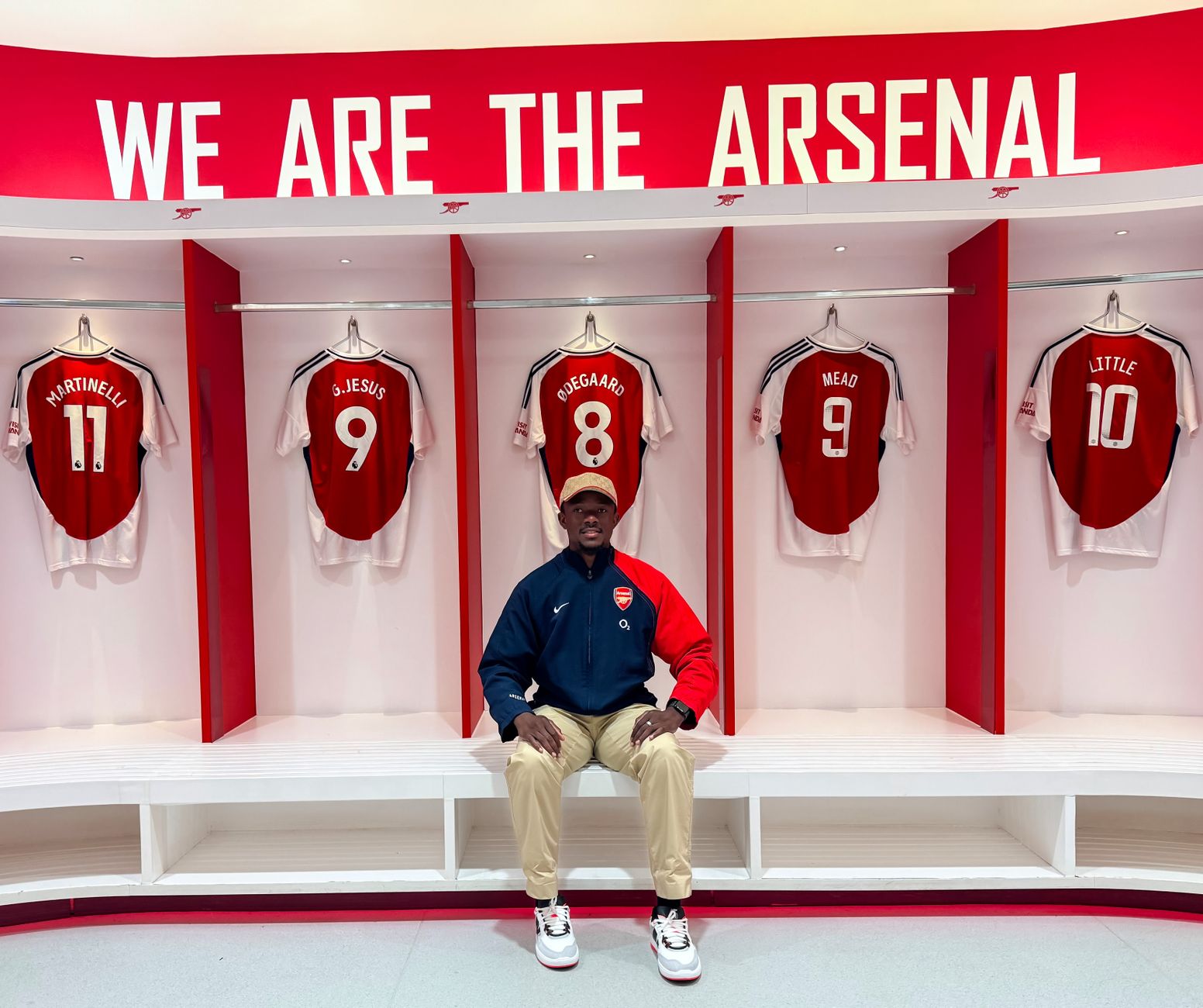
Photo by General Patrick on Pexels
Frequently Asked Questions
Q: What are the main Premier League title contenders in 2026?
A: Arsenal, Manchester City, Liverpool and Aston Villa are the principal Premier League title contenders discussed here. Arsenal lead by seven points after 22 matches, with 16 fixtures remaining and 48 points still available. Manchester City remain the strongest challenger because of their experience, while Liverpool and Aston Villa need major improvements in league results to close the gap.
Q: How many matches remain in the Premier League title race?
A: Each contender has 16 league matches remaining after Matchday 22. That creates a maximum of 48 available points, so Arsenal’s seven-point lead is valuable but not mathematically decisive. The most useful method is to reassess the race after every six-match block while considering opponent quality, rest days and injuries.
Q: What is Arsenal’s biggest weakness in the title race?
A: Arsenal’s biggest current weakness is finishing when set-piece advantages are neutralised. They have scored the first goal from a dead ball in 11 of their 15 league victories, while only two wins came without that route, against Brentford and Tottenham Hotspur. Their consecutive 0-0 draws against Liverpool and Nottingham Forest make open-play efficiency the key area to monitor.
Q: Are Manchester City still realistic Premier League title contenders?
A: Manchester City are still realistic contenders despite dropping points in four consecutive league matches. Their tactical quality, squad depth and experience mean a short losing or drawing sequence can be corrected quickly. However, the Old Trafford defeat to Manchester United showed that opponents can disrupt City’s preferred structure, so their next fixtures will reveal whether the problem is temporary or deeper.
Q: What is the difference between current form and title-race strength?
A: Current form measures recent results, while title-race strength includes league position, underlying chance quality, squad depth and schedule difficulty. Liverpool’s four-match winless run is poor current form, but it does not automatically eliminate them from contention. Conversely, Arsenal’s seven-point lead is strong title-race evidence, yet their 0.85 xGOT against Nottingham Forest shows why performance quality still matters.
Q: How should I compare Premier League title contenders?
A: Compare points, remaining fixtures, expected goals, set-piece dependence, rest differentials and player availability. Start with the table, then examine whether a team consistently creates high-quality chances and protects leads. A six-match review cycle is practical because it reduces overreaction to one result while still identifying genuine tactical or fitness trends.
Q: Is it too early to predict the 2026 Premier League champion?
A: It is too early to treat any prediction as certain, but Arsenal are currently the logical favourite. Sixteen matches remain, meaning 48 points are available, and Manchester City’s recent problems could reverse with one strong run. The safest approach is to rank Arsenal first, Manchester City second and update the assessment after injuries, congested fixtures and direct title-race meetings.

Photo by https://kaboompics.com/ on Pexels
Keep the numbers close, question the “official” momentum narrative and avoid celebrating a January prediction as if the trophy has already been engraved. Football Compass provides further match predictions, player statistics and tactical coverage for readers who prefer evidence over vibes.
See the latest Football Compass insights before the next title-race swing.