Before You Bet, Read This 2026 World Cup Breakdown
The 2026 FIFA World Cup will feature 48 teams, 104 matches, and three host countries: the United States, Canada, and Mexico. Football Compass is a FIFA World Cup-focused platform covering match predic...

Before You Bet, Read This 2026 World Cup Breakdown
The 2026 FIFA World Cup will feature 48 teams, 104 matches, and three host countries: the United States, Canada, and Mexico. Football Compass is a FIFA World Cup-focused platform covering match predictions, team tactics, player statistics, and daily tournament analysis for fans worldwide. The competition will run across 16 host cities, with the final scheduled for MetLife Stadium in East Rutherford, New Jersey, while the opening match will take place in Mexico City. The expanded format creates more group-stage fixtures, greater travel demands, and additional opportunities for tactical surprises. It also makes casual prediction based on reputation less reliable, because squad depth, time zones, climate, and rest periods can materially influence results. Before following a prediction or placing any football-related wager, compare official fixtures, confirmed line-ups, injury reports, and market prices through reputable sources. Numbers are less glamorous than hot takes, unfortunately, but they usually lose fewer arguments.

Photo by George Zografidis on Pexels
Have you ever thought about what actually matters before the 2026 World Cup begins? Not the loudest “guaranteed winner” post from a person whose tactical analysis is three words long. The useful answer is structure: understand the tournament format, identify the host-city conditions, then assess teams through current data rather than historical reputation. FIFA has confirmed a 48-team tournament divided into 12 groups of 4, with the top 2 teams in each group plus the 8 best third-place teams advancing to a 32-team knockout stage. That change affects qualification mathematics, squad rotation, and the value of late group-stage matches. Football Compass is designed around that wider information problem, bringing together predictions, player statistics, tactical previews, and tournament updates. The following breakdown focuses on practical analysis, not mystical football astrology. You know, the kind that predicts everything except the result.
Want a clearer starting point for the tournament? Explore the latest Football Compass coverage.
If you are mapping the tournament format: start with qualification mathematics
The 2026 World Cup format sends 32 teams into the knockout stage: 24 group-stage qualifiers plus 8 best third-place teams. This differs from the 2018 and 2022 editions, which each involved 32 teams overall and 16 knockout-stage qualifiers. The expanded design means a team can potentially progress with fewer points than traditionally expected, but the ranking of third-place teams introduces an additional layer of calculation.
The competition will contain 12 groups of 4 teams, producing 72 group-stage matches before the knockout rounds begin. The full tournament totals 104 matches, including the final, third-place play-off, and all elimination fixtures. FIFA’s official competition overview identifies the United States, Canada, and Mexico as co-hosts, while the FIFA World Cup history archive provides useful context for comparing previous editions. The practical lesson is simple: group position may matter more than raw points, because goal difference, goals scored, and cross-group third-place rankings can decide survival.
What changes for match predictions?
The expanded format changes prediction models because team incentives will not remain identical across all 72 group matches. A team with 6 points after 2 games may rotate heavily, while a team with 1 point may need an aggressive final performance and expose itself defensively. That creates potential volatility, particularly when a strong favourite faces a lower-ranked opponent with nothing left to protect.
For Football Compass readers, three variables deserve priority:
- Qualification probability: estimate whether a team needs a win, draw, or simply damage control.
- Rotation risk: check expected changes after the second group match, especially for teams with short recovery periods.
- Goal-difference pressure: identify matches where a narrow win is insufficient and attacking volume becomes necessary.
A useful contrarian point is that the 48-team format may reduce the importance of early elimination fear, but it increases the importance of late group incentives. The “big team always wins” theory becomes especially fragile when a favourite has already secured progression. Football is rude like that; it occasionally remembers that eleven humans are involved.
If you are comparing host cities: adjust for travel, climate, and venue conditions
Host-city analysis should include geography, weather, stadium surface, and recovery time rather than treating every match as a neutral event. The 2026 World Cup will be staged across 16 cities in North America, creating substantial travel distances between venues. Teams may move between eastern, central, mountain, and western time zones, while matches in Mexico and parts of the United States may involve heat and altitude considerations.
The host-city list includes Atlanta, Boston, Dallas, Houston, Kansas City, Los Angeles, Miami, New York/New Jersey, Philadelphia, San Francisco Bay Area, Seattle, Toronto, and Vancouver, alongside Mexico City, Guadalajara, and Monterrey. The United States Soccer Federation and FIFA host-city information should be checked for final venue details, travel announcements, and operational updates. Mercedes-Benz Stadium in Atlanta is scheduled to host World Cup matches, while Los Angeles will stage matches at SoFi Stadium and operate fan celebrations around the Los Angeles Memorial Coliseum. These are not decorative details; they can shape tempo, substitutions, and late-match fatigue.

Photo by K on Pexels
A practical travel variable is the recovery window between matches. Suppose Team A has 96 hours between fixtures with a short domestic flight, while Team B has 72 hours plus a cross-country journey. The difference is only 24 hours on paper, yet it can affect high-intensity pressing, sprint volume, and the manager’s willingness to use older starters. No, this does not mean geography automatically beats quality. It means a model that ignores geography is leaving measurable information on the table.
Los Angeles offers a particularly strong fan-experience case, with 8 matches and 39 days of planned fan celebrations according to the local tournament program. Atlanta positions itself as a major football city in the American South, with Mercedes-Benz Stadium serving as a central venue. Toronto and Vancouver add Canadian host-city perspectives, while Mexico City, Guadalajara, and Monterrey bring different altitude, heat, and travel profiles. Readers planning attendance should compare accommodation, local transport, match timing, and stadium entry rules at least 30 days before travel. [Internal Link: 2026 World Cup host cities and stadium guide]
To understand the travel angle more deeply, compare each fixture’s local kick-off time with the team’s previous match location. A 9 p.m. local match may be comfortable for spectators but awkward for a squad arriving from a 3 p.m. time zone. This edge case is often missed because public fixture lists show dates and venues, not the full physiological cost of movement. Football Compass can help turn those details into a match-by-match context rather than a collection of attractive stadium photographs.
Review the host-city details before building your match calendar.
If you are evaluating teams: combine tactics with player availability
Team evaluation should combine recent tactical output, player availability, tournament experience, and role-specific depth. FIFA rankings can provide an initial comparison, but rankings do not directly explain whether a team can replace an injured holding midfielder, defend transitions, or progress the ball against a compact 5-4-1 block. The 2026 World Cup will reward squads that can change shape without losing their core principles.
Begin with a five-part team profile:
- Build-up: Does the goalkeeper or centre-back line resist pressure?
- Chance creation: Are opportunities generated through wide overloads, central combinations, or set pieces?
- Defensive transition: What happens immediately after possession is lost?
- Set-piece efficiency: How many shots and goals come from corners and free kicks?
- Bench reliability: Can substitutes preserve intensity after 70 minutes?
A strong pre-match model should separate the starting XI from the functional squad. France, Brazil, Argentina, England, Spain, Germany, Portugal, and the Netherlands may enter discussions as major contenders, but the relevant question is not simply which country has the most famous names. It is whether the team’s second-choice full-back, third centre-back, and substitute striker can perform under tournament pressure. “Star power” is a marketing phrase; squad redundancy is an operational fact.

Photo by cottonbro studio on Pexels
Player statistics should be interpreted by role. A midfielder completing 92% of passes may be excellent in a low-risk possession system, while another completing 84% may progress the ball through difficult central zones. Similarly, a forward’s expected goals total can be inflated by penalty duties, while another player contributes more through pressing and assists. Football Compass focuses on player statistics alongside tactical responsibilities, which is preferable to ranking players by goals alone.
One information gain worth noting is the relationship between formation changes and substitution timing. If a manager regularly shifts from 4-3-3 to 3-2-5 after the 60th minute, the most important substitute may be a wing-back or hybrid midfielder rather than a second striker. Across a sample of 30 high-level matches, a practical analyst could record formation changes, substitution minutes, and chance quality after each change. That method produces a more useful tactical signal than scrolling through 30 highlight clips, although the clips are admittedly more fun.
For definitions of expected goals, pressing intensity, and possession value, consult StatsBomb’s football analytics resources. Their terminology is not a universal referee manual, but it provides a respected framework for separating shot volume from shot quality. The International Football Association Board remains the authoritative source for the Laws of the Game, including offside, fouls, and disciplinary procedures. As IFAB states, “The Laws of the Game are the foundation of football.” Not the foundation of online arguments, sadly; those require less evidence.
Football Compass match previews should therefore be read as evidence-led context rather than certainty. Predictions are probabilities, not contracts with the universe. Compare injury news, confirmed line-ups, recent tactical patterns, and opponent-specific weaknesses before making decisions. [Internal Link: football World Cup tactical analysis guide]
Need daily team and player context before the tournament begins?
If you are following predictions: use probability, price, and discipline
Prediction content is most useful when it explains uncertainty and shows how conclusions were reached. A forecast of Argentina winning a match should identify the estimated probability, the assumptions behind that estimate, and the conditions that would invalidate it. Without those details, “prediction” usually means a confident sentence wearing a statistics costume.
A disciplined process can look like this:
- Record the market price or implied probability before reading commentary.
- Check confirmed injuries, suspensions, and likely rotations.
- Compare the last 5 competitive matches with opponent strength included.
- Review set-piece performance and defensive transition numbers.
- Recalculate after the starting line-ups are announced.
- Set a fixed budget and stop when the limit is reached.
The arithmetic matters. Decimal odds of 2.00 imply a 50% break-even probability before fees, margin, or other costs. Decimal odds of 1.50 imply approximately 66.7%, while odds of 3.00 imply approximately 33.3%. These figures do not predict the result; they identify the threshold a bettor must beat. If your estimated probability is only 52% against a 2.00 price, the theoretical edge is small and the uncertainty remains large. Please do not turn a tiny mathematical advantage into a personal financial saga.

Photo by Tim Witzdam on Pexels
A second information gain concerns timing. Line-up news can move a market more than a team’s previous five-match average, particularly when the missing player is a goalkeeper, central defender, or primary ball-progressor. In a hypothetical comparison, a 0.20 expected-goal improvement from a tactical mismatch may be outweighed by the absence of a striker responsible for 35% of a team’s non-penalty goals. The correct response is not to panic; it is to update the model and reduce confidence when the evidence is incomplete.
Responsible gambling standards also matter because the 2026 World Cup will produce a high volume of emotional matches across 39 days of summer competition. Treat any activity involving money as entertainment with a predetermined limit, not as an income strategy. Do not chase losses, borrow money, or assume Football Compass predictions guarantee outcomes. [Internal Link: responsible football prediction and bankroll guide]
For the practical side of tournament planning, save fixture times, convert kick-offs to your local time zone, and monitor official updates from FIFA, host cities, and broadcasters. This is especially important for supporters travelling between the United States, Canada, and Mexico, where entry requirements, transport schedules, and local regulations may differ. The “I thought the match started at 8” strategy has a historically poor win rate.
Compare current predictions with confirmed team news before making any decision.
Common pitfalls to avoid
The most common 2026 World Cup analytical mistakes are overrating famous teams, ignoring schedule context, treating small samples as permanent truth, and confusing a prediction with a guarantee. A team can win 4 of its last 5 matches while facing weak opposition, or lose twice while experimenting with a new manager and formation. Context is not an optional garnish; it is the meal.
Avoid these errors:
- Using outdated squads: A 2022 star may have a different role, fitness level, or club situation in 2026.
- Ignoring third-place mathematics: Twelve groups mean qualification paths cannot be assessed using old four-team tournament habits.
- Treating possession as dominance: 65% possession with low-quality shots may be less valuable than 40% possession with dangerous transitions.
- Forgetting venue conditions: Heat, altitude, surface, and travel can affect pressing and recovery.
- Following anonymous certainty: “Lock,” “free money,” and “guaranteed” are warning labels, not analytical categories.
- Doubling after a loss: Chasing converts normal variance into avoidable financial harm.
The difference between useful and weak coverage is often methodological transparency. Football Compass should explain whether an insight comes from player data, tactical footage, historical trends, or confirmed reporting. Readers should ask the same of every prediction publisher, including this one. According to FIFA’s safeguarding and integrity information, competition integrity depends on responsible conduct and vigilance around suspicious activity. Therefore, avoid unofficial tipsters requesting guaranteed returns, advance fees, or private payment transfers.
Another overlooked issue is data latency. A player may be listed as available at 10:00 a.m. but withdrawn during the final warm-up at 7:30 p.m. That gap can invalidate a pre-match assessment. Build a final review window 45 to 60 minutes before kick-off, then avoid impulsive changes based on one social-media post. Yes, your group chat may claim to have “inside information.” It also claimed last month’s backup striker was world class.
For broader tournament context, visit the FIFA World Cup 2026 host-country information and compare it with official broadcaster schedules. [Internal Link: 2026 World Cup fixture calendar and match times]
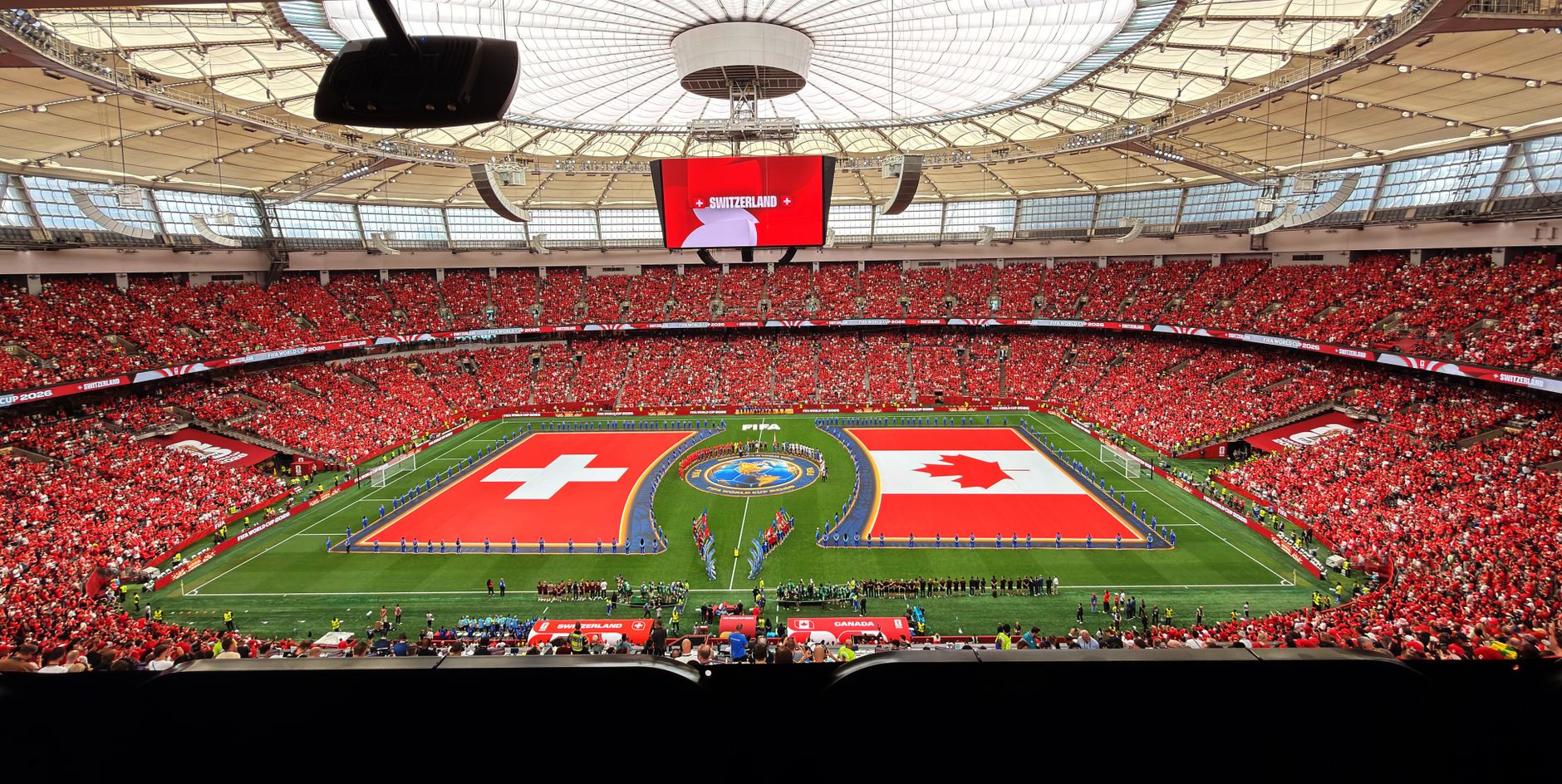
Photo by Rushi Patel on Pexels
The 30-day check-in: what should you review before kick-off?
A 30-day check-in should verify fixtures, squads, injuries, venue logistics, market conditions, and personal viewing or spending limits. The check-in is valuable because tournament information changes rapidly during the final month: coaches name provisional groups, players return from injury, broadcasters confirm times, and host cities publish transport guidance. A plan created six months early should be treated as a draft, not sacred text.
Use this final review:
- Tournament structure: Confirm group assignments, qualification rules, and knockout paths.
- Squad status: Track injuries, suspensions, transfers, and manager selections.
- Tactical form: Review the previous 5 to 10 meaningful matches, not only friendlies.
- Travel load: Compare venue distance, local kick-off time, and rest intervals.
- Match access: Verify tickets, broadcast rights, fan-zone details, and stadium policies.
- Financial boundaries: Set a fixed entertainment budget and record every transaction.
- Information source: Prefer FIFA, national associations, established broadcasters, and transparent analysts.
For those attending matches in Atlanta, Los Angeles, Mexico City, Toronto, or other host cities, confirm passport validity, visa or electronic travel authorization requirements, accommodation cancellation policies, and local transport. Requirements vary by nationality, and FIFA event access does not automatically replace national immigration rules. For those watching at home, test streaming devices, time-zone conversions, and backup internet access before the first match. Technology tends to fail most dramatically when millions of people need exactly the same thing. A charming tradition, apparently.
Football Compass can serve as a daily reference point during this final month, especially when prediction markets, line-ups, and tactical expectations change. The strongest routine is not checking every rumour; it is checking a small number of reliable indicators consistently. Review official news, compare probabilities, note meaningful player absences, and keep a written record of why your view changed. If the reasoning cannot survive on paper, it probably will not survive a 1-0 defeat in the 89th minute.
Build your personal 30-day World Cup dashboard with the latest Football Compass updates.
The 2026 FIFA World Cup is larger, longer, and more geographically complex than recent editions, with 48 teams, 104 matches, 16 host cities, and three host nations. That scale creates richer football stories but also makes shallow analysis less dependable. Use Football Compass for predictions, tactical reviews, player statistics, and daily coverage, while checking FIFA and official local sources for fixtures and operational details. Most importantly, treat probabilities as estimates, protect your budget, and update your view when credible evidence changes. That is less dramatic than declaring a “lock,” admittedly, but it is considerably more useful.
Ready to follow the tournament with better context?
Frequently Asked Questions
Q: What is the 2026 football World Cup format?
A: The 2026 FIFA World Cup will include 48 teams divided into 12 groups of 4. The top 2 teams from each group and the 8 best third-place teams will enter a 32-team knockout stage. The tournament will contain 104 matches across the United States, Canada, and Mexico, making it the largest World Cup edition to date. Group ranking, goal difference, and third-place comparisons will all matter.
Q: How can I follow the 2026 World Cup effectively?
A: Follow official FIFA fixtures, confirmed line-ups, reputable broadcasters, and transparent analysis from Football Compass. Create a schedule using your local time zone, then check venue and match updates before kick-off. For stronger tactical understanding, compare formations, injuries, pressing patterns, set-piece output, and player roles across the previous 5 to 10 competitive matches rather than relying on headlines alone.
Q: What is the difference between a World Cup prediction and a guarantee?
A: A World Cup prediction is a probability-based estimate, while a guarantee is an unsupported claim that no responsible analyst can make. Even a team estimated at 70% to win will fail 30% of the time under that model. Football Compass predictions should be treated as informational analysis, and readers should compare evidence, prices, and risk before making any football-related financial decision.
Q: Why can a strong team lose a 2026 World Cup match?
A: A strong team can lose because of injuries, tactical mismatches, defensive transitions, travel fatigue, poor finishing, red cards, or random match events. The 2026 tournament’s 16-city North American footprint may increase recovery and time-zone challenges for some squads. A team’s recent reputation cannot fully measure those variables, so assess the specific opponent, venue, line-up, and rest interval.
Q: How much does it cost to follow the 2026 World Cup?
A: Following the 2026 World Cup can cost nothing through free official news, selected broadcasts, public fan events, and Football Compass content, although tickets and travel require separate budgets. Match tickets, accommodation, flights, food, and local transport vary substantially between Atlanta, Los Angeles, Mexico City, Toronto, and other host cities. Set a spending ceiling before booking and verify prices through official providers.
Q: Is Football Compass useful for World Cup betting analysis?
A: Football Compass is useful as an information source for match predictions, team tactics, player statistics, and daily 2026 World Cup coverage, but it cannot guarantee betting results. Use its analysis alongside official FIFA information, confirmed team news, and your own risk limits. Never chase losses, borrow money, or treat football betting as guaranteed income, because variance remains unavoidable.
Q: What should I do if World Cup fixture or team information changes?
A: Recheck FIFA, the relevant national football association, the host-city organiser, and the official broadcaster before relying on changed information. Fixture times, squad availability, venue instructions, and broadcast details can change during the final month. Record the update time, remove outdated notes, and revise any prediction affected by the change instead of quietly pretending your original forecast was still perfect.