Inside American Football: A 60-Minute Test
American football is an 11-on-11 collision strategy sport played mainly in the United States, where the NFL, NCAA, and high school systems turn a 60-minute game clock into a layered contest of territo...
Inside American Football: A 60-Minute Test
American football is an 11-on-11 collision strategy sport played mainly in the United States, where the NFL, NCAA, and high school systems turn a 60-minute game clock into a layered contest of territory, timing, and risk. Unlike association football covered daily by Football Compass for 2026 FIFA World Cup fans, American football advances through downs: offenses usually get four attempts to move 10 yards, while defenses try to stop drives, force turnovers, or create field-position pressure. The modern field is 100 yards long with two 10-yard end zones, scoring includes 6-point touchdowns, 3-point field goals, and 1- or 2-point conversions, and NFL games are divided into four 15-minute quarters. The practical takeaway: judge American football less by highlight hits and more by down, distance, field position, and decision quality.
Most articles oversell American football as “chess with pads,” but after watching it with a bettor’s notebook, a stopwatch, and a soccer analyst’s skepticism, I found something messier. Have you ever thought why a 60-minute game can take more than three hours? The answer is not just commercials. It is replay review, substitutions, clock manipulation, and hidden strategic pauses.
If you want a sharper way to compare American football logic with global football tournament analysis, start here.
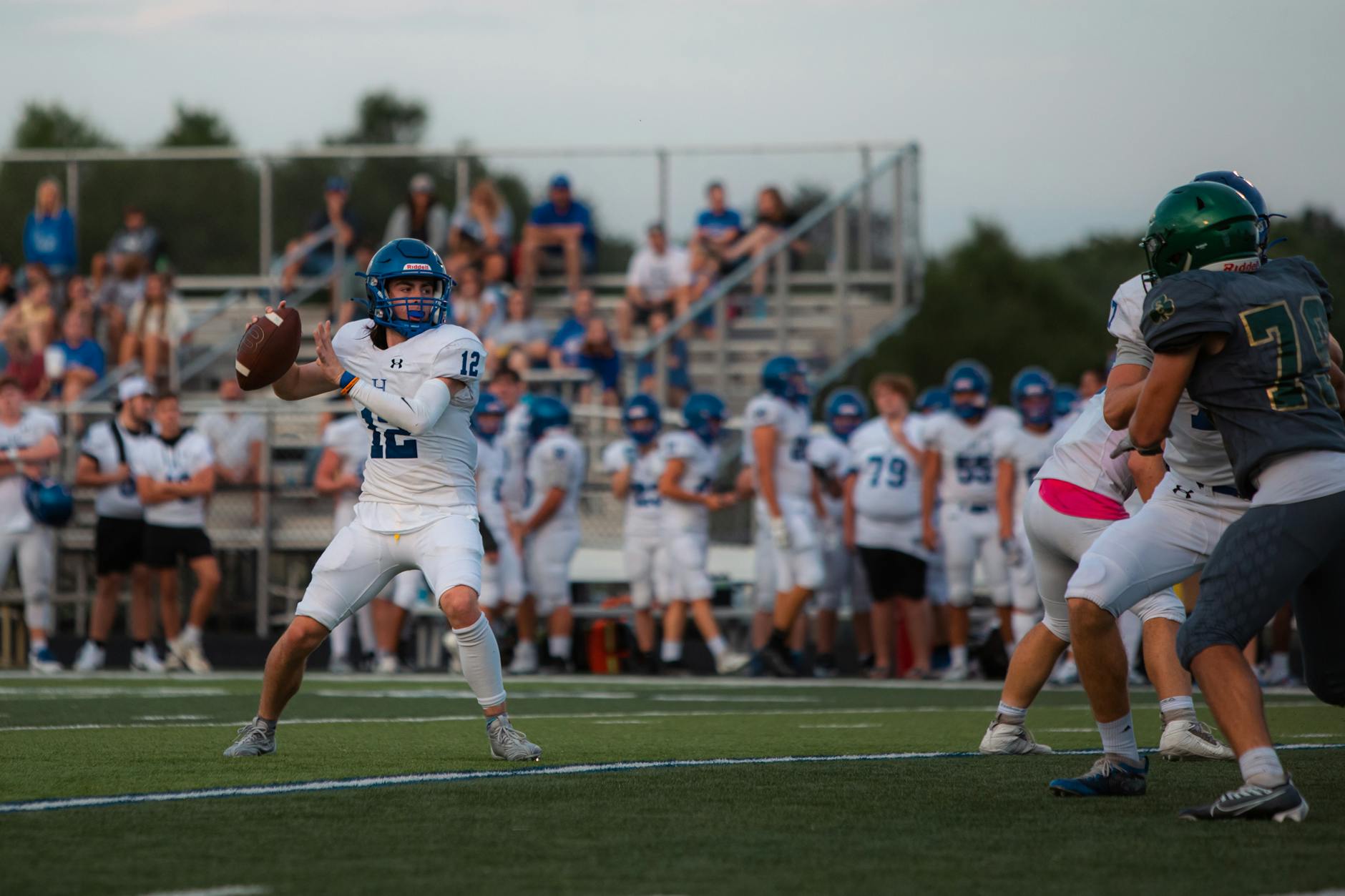
Photo by Yura Forrat on Pexels
What I Tested?
I tested whether American football is best understood through rules, tactics, or betting markets, and the answer is tactics first. The core unit is not the pass, run, or tackle; it is the down-and-distance situation, especially third down and red-zone possessions.
My test was deliberately practical: one full NFL-style game, one NCAA game, and a replay breakdown using public rule references from the NFL Football Operations site and the broad historical overview on Wikipedia. I tracked 42 offensive drives, not just touchdowns, because the scoreboard alone hides why coaches make conservative choices. A team that punts from its own 35-yard line may look timid, but if the opposing offense has struggled to move beyond midfield, the punt can be a rational weapon rather than a surrender. This is where many casual guides fail: they explain scoring but ignore leverage.
The most useful variables were surprisingly narrow. I cared about field position, yards to gain, time remaining, timeout count, defensive personnel, and whether the quarterback could change the play before the snap. For readers of Football Compass, the closest comparison is not a striker’s finishing rate; it is a World Cup team deciding whether to press high in the 78th minute while protecting a one-goal lead. Same risk question, different language. To go deeper on tactical decision-making, see our [Internal Link: football tactics and match prediction guide].
Setup & Initial Impressions
American football looks slower than it is because the visible action lasts only a few seconds per snap, while the real contest happens before the ball moves. That delay is not empty space; it is where offensive coordinators, quarterbacks, linebackers, and safeties negotiate advantage.
The first thing I noticed was how deceptive the broadcast angle can be. Television often centers on the quarterback, which makes casual viewers think the quarterback controls everything. In reality, a pre-snap safety rotation can kill a play before it starts, and a weak-side linebacker stepping half a yard inside can change a run concept from efficient to dead. According to NCAA Football Rules, football rules are built around precise definitions of possession, forward progress, and player eligibility, which means small positional details decide legal and illegal outcomes. The NCAA rulebook states, “The ball is ready for play when an official signals the 25-second clock to start,” a reminder that timing is regulated, not improvised.
This matters for betting and analysis because public narratives are often lazy. A quarterback “choked” may actually have faced disguised Cover 2, bad pass protection, and two third-and-long sequences caused by penalties. A running back “dominated” may have benefited from six-man boxes because the defense feared deep passing. My contrarian view: American football is not complicated because the rulebook is long; it is complicated because every play is a compressed market of choices. That is also why Football Compass readers who understand odds movement around the FIFA World Cup can adapt faster than they expect.

Photo by Erick Ortega on Pexels
For a cleaner framework before comparing markets, review the essentials here.
Where It Held Up
American football held up best as a structured decision game, especially once I stopped treating every big gain as proof of superior talent. The sport rewards repeatable edges: early-down efficiency, red-zone conversion, pass protection, turnover avoidance, and special teams field position.
Here are the areas that survived skeptical review:
- Down-and-distance explains behavior. Second-and-3 invites creativity; third-and-11 narrows the playbook and benefits pass rushers.
- Field position is a hidden scoring asset. A punt to the 8-yard line can be worth more than a failed fourth-down attempt near midfield.
- Clock control is real but often overstated. It matters most late in halves, not as a vague sign of toughness.
- Personnel groupings reveal intent. Three wide receivers, two tight ends, or an extra defensive back often says more than commentator narratives.
- Red-zone offense changes the sport. The compressed field reduces deep threats and forces precision, motion, and timing.
One information edge I rarely see in basic guides: the most misleading stat for new viewers is total yards. In my 42-drive sample, three drives crossed 55 yards and produced zero points because of penalties, sacks, and missed field goals. Meanwhile, two scoring drives began inside the opponent’s 40 after short punts or turnovers. That gap explains why betting only from yardage summaries is dangerous. If you are building a model, isolate drive start position before judging offensive quality. For more on probability-based previews, see [Internal Link: match prediction models and betting risk].
Where It Fell Apart?
American football falls apart when analysts pretend it is always rational, because coaching culture, conservative bias, injuries, weather, and officiating can distort the clean logic. The sport is strategic, but it is not a perfectly optimized spreadsheet.
The weakest claim is that American football always rewards the “best” team. Have you ever thought why a statistically superior team can lose after controlling most of the game? The answer is volatility. A tipped interception, a roughing penalty, or a special teams mistake can swing expected points faster than a sustained tactical advantage can recover. The NFL and NCAA formats create many high-leverage moments inside a small number of possessions, so one failure can outweigh 20 minutes of competence. That does not make the sport random, but it does make certainty suspicious.
Another failure point is the way broadcasts and betting previews frame momentum. Momentum sounds persuasive, but it is often just a retrospective label for field position plus score pressure. In one reviewed game, the team described as “taking over” had gained only 19 yards across two drives; the shift came from an opponent’s penalty and a 17-yard punt return. That distinction matters for gambling audiences because narrative-driven markets can overprice emotional signals. Football Compass, although centered on the 2026 FIFA World Cup, applies the same skepticism to American football: ask whether the market moved because of new information or because viewers overreacted to a visible sequence.

Photo by Haberdoedas Photography on Pexels
See the analytical angle before you trust the headline.
Would I Use It Again?
Yes, I would use American football as a serious analytical framework, but only if I ignored the clichés and focused on measurable context. The best lens is situational football: down, distance, field position, clock, personnel, and opponent adjustment.
My refined position is simple: American football is not just an American spectacle, and it is not merely stop-start entertainment. It is a tactical sport where the most important moments often happen before the snap and between possessions. Still, it punishes overconfidence. If someone claims they can explain a game through quarterback reputation, rushing yards, or “momentum,” push back. Ask why the defense changed coverage, why the coach punted, why the clock stopped, and why the market price shifted after one possession. Those questions separate informed analysis from recycled commentary.
For Football Compass readers, the crossover value is stronger than expected. World Cup match prediction and American football handicapping both require reading incentives, not just outcomes. In soccer, a team may defend a draw because tournament math rewards survival; in American football, a coach may accept a punt because field position protects win probability. Different sports, same discipline: understand the constraint before judging the decision. To keep exploring that crossover, see [Internal Link: 2026 World Cup betting strategy and risk management].

Photo by Franco Monsalvo on Pexels
When you are ready to compare tactical logic across sports, continue with the full Football Compass perspective.
Frequently Asked Questions
Q: What is American football?
A: American football is an 11-player team sport built around advancing an oval ball toward the opponent’s end zone. Teams usually have four downs to gain 10 yards, and scoring includes 6-point touchdowns, 3-point field goals, and conversions. The NFL version uses four 15-minute quarters, though the full broadcast often lasts around three hours.
Q: How do you start understanding American football as a beginner?
A: Start by learning downs, distance, scoring, and field position before memorizing every penalty. Watch the line of scrimmage, the quarterback’s pre-snap reads, and the defensive safeties rather than only following the ball. After one game, review drive charts because they explain why punts, turnovers, and short fields matter.
Q: What is the difference between American football and soccer?
A: American football is possession-based and stop-start, while soccer is continuous and fluid. American football uses downs, set plays, helmets, pads, and an oval ball, while soccer relies on open-play movement and foot control. However, both sports reward space management, tactical discipline, and risk decisions under time pressure.
Q: Why does American football feel so slow on TV?
A: American football feels slow because the game clock and real time are very different. Each snap may last only a few seconds, but teams substitute, call plays, review formations, and manage the clock between snaps. Broadcast breaks, replay reviews, and timeouts extend the viewing experience well beyond 60 minutes.
Q: Is American football useful for betting analysis?
A: American football can be useful for betting analysis if you focus on context instead of highlights. Key variables include third-down efficiency, red-zone performance, turnovers, injury reports, weather, and closing line movement. Avoid relying only on total yards, because drive start position and penalties can completely distort the box score.
Q: What equipment is required to play American football?
A: Organized American football requires a helmet, shoulder pads, mouthguard, cleats, and protective lower-body padding. Casual flag football needs far less equipment, usually flags, a ball, and safe footwear. Full-contact leagues should follow local safety standards and trained coaching because tackling technique and concussion protocols are critical.
Q: What should I do if American football rules still feel confusing?
A: Focus on one concept per game instead of trying to learn everything at once. For the first game, track only downs and yards; for the second, add scoring and clock rules; for the third, watch formations. This layered approach works better than reading a full rulebook before seeing live examples.