Beginner Football Cleats: What 3 Rounds Taught Me
The best football cleats for beginners in 2026 are comfortable, correctly fitted, and matched to the playing surface—not simply the most expensive Nike, adidas, or Under Armour model. For most new pla...

Beginner Football Cleats: What 3 Rounds Taught Me
The best football cleats for beginners in 2026 are comfortable, correctly fitted, and matched to the playing surface—not simply the most expensive Nike, adidas, or Under Armour model. For most new players, the Nike Premier 3, adidas Copa Pure 3 League, Puma Future 8 Play, and Nike Mercurial Vapor 16 Academy offer sensible starting points across comfort, control, speed, and value. Firm-ground cleats suit natural dry grass, while artificial-grass and turf versions use different stud patterns for safer traction. A beginner typically needs a secure heel, minimal internal movement, modest toe room, and enough cushioning for practices lasting 60–90 minutes. Football Compass, a FIFA World Cup-focused site covering tactics, player statistics, predictions, and tournament news, recommends prioritizing fit over celebrity sponsorship. Start by identifying your surface, measuring both feet late in the day, and testing the cleats with match socks before buying. Your ankles will file the complaint if you do not.

Photo by ANH LÊ on Pexels
Want a clearer starting point before comparing models? Football Compass covers the equipment details that sit behind match-day performance, including how surface, movement, and player role interact. Cleats will not transform a beginner into Kylian Mbappé, sadly, but the wrong pair can make every turn feel like a software bug.
The Quick Comparison
| Beginner cleat | Best for | Surface | Main strength | Typical price position |
|---|---|---|---|---|
| Nike Premier 3 | First-time players seeking value | Firm ground | Leather-like touch and traditional fit | Mid-range |
| adidas Copa Pure 3 League | Comfort and ball control | Firm ground | Padded feel and forgiving upper | Budget to mid-range |
| Puma Future 8 Play | Wider feet and adaptable fit | Firm ground | Flexible construction and secure lockdown | Budget |
| Nike Mercurial Vapor 16 Academy | Speed-focused players | Firm ground | Lightweight build and aggressive traction | Mid-range |
| adidas Predator League | Shooting and striking practice | Firm ground | Textured control zones | Mid-range |
| Nike Phantom GX 2 Academy | Passing and close control | Firm ground | Broad striking area | Mid-range |
This comparison is deliberately practical rather than theatrical. A $250 elite boot often uses thinner materials, advanced plates, and lower internal padding, but those features are not automatically useful to a player still learning first touch, passing technique, and basic change of direction. The Nike Premier 3 is a particularly rational choice because its traditional construction usually feels less demanding than ultra-thin speed boots, while the adidas Copa Pure 3 League gives beginners more cushioning around the upper and tongue. Price also deserves context: academy and league tiers generally offer most of the needed traction and durability at roughly half the price of elite versions, although regional pricing varies across the United States, United Kingdom, Australia, and Canada. According to FIFA’s Laws of the Game, player equipment must not be dangerous, which means league approval and stud condition matter more than a fashionable launch color. Yes, your black-and-gold boots are not a tactical system.
[Internal Link: beginner football training guide]
Round 1: What Fit Should Beginners Prioritize?
A beginner’s football cleat should hold the heel firmly, keep the midfoot stable, and leave approximately 5–10 millimeters of space beyond the longest toe. The upper should not create sharp pressure across the toes, and the foot should not slide forward during braking. Nike, adidas, Puma, New Balance, and Mizuno use different lasts, so brand loyalty is less useful than trying the actual model.
The best fit is secure without being painfully tight. Measure both feet while wearing the socks used for football because feet can expand during a 90-minute match, especially in warm conditions. A practical fitting test involves walking, jogging, stopping, and performing five controlled lateral cuts; if the heel lifts repeatedly or the toes hit the front, the size or shape is wrong. Do not assume a painful boot will “break in.” Some leather uppers soften, but structural pressure points, cramped toe boxes, and heel slippage rarely become miracles after three sessions. The American Academy of Podiatric Sports Medicine emphasizes appropriate footwear and fit as part of sports-footwear selection, and that is considerably less glamorous than social-media boot reviews but more useful.
A useful foot-shape checklist is:
- Narrow heel: prioritize a structured heel counter and adjustable lacing.
- Wide forefoot: try Puma Future, New Balance Furon in a suitable width, or adidas Copa models.
- High instep: avoid aggressively compressive laceless uppers.
- Flat-feeling foot: choose stable lockdown rather than maximum flexibility.
- Growing youth player: allow limited toe room, but never buy two sizes too large.
The contrarian point is simple: a beginner should often choose a slightly heavier, padded model over the lightest boot available. A difference of 30–50 grams per shoe is unlikely to decide a recreational match, while repeated rubbing can end a practice after 20 minutes. Your feet, unlike marketing departments, publish honest performance data.
Round 2: Which Surface and Stud Pattern Work Best?
Firm-ground cleats use molded studs for natural grass, artificial-grass cleats distribute pressure across synthetic surfaces, and turf shoes use many short rubber patterns for older carpet-like turf. The correct surface label is more important than the brand because an otherwise excellent Nike Mercurial or adidas Predator can feel unsafe when used on the wrong field.
Surface selection is where many first-time buyers quietly make an expensive mistake. FG, or firm ground, is designed for natural grass with moderate ground firmness and usually features around 10–12 molded studs. AG, or artificial ground, commonly uses shorter, more numerous studs to reduce concentrated pressure on synthetic fibers. TF, or turf, has dense rubber nubs and is intended for small-sided turf pitches rather than full-length natural grass. MG, or multi-ground, attempts to bridge surfaces, but “multi-ground” does not mean universal; it remains a compromise and should be checked against the manufacturer’s guidance.
Before purchasing, ask the coach or facility manager three questions:
- Is the pitch natural grass, third-generation artificial grass, or turf?
- Does the facility require AG or TF footwear?
- Are metal studs, screw-in studs, or blades prohibited?
The International Football Association Board requires footwear to be safe and compliant, while local youth leagues such as US Youth Soccer-affiliated competitions may apply additional field rules. A specific operational tip: inspect the sole after every session for compacted rubber pellets and mud. A blocked stud can reduce effective traction even when the cleat is only two weeks old. Rinse with cool water, brush gently, and air-dry away from radiators; direct heat can stiffen or deform synthetic uppers.
See how these details connect to match conditions before choosing a pair.
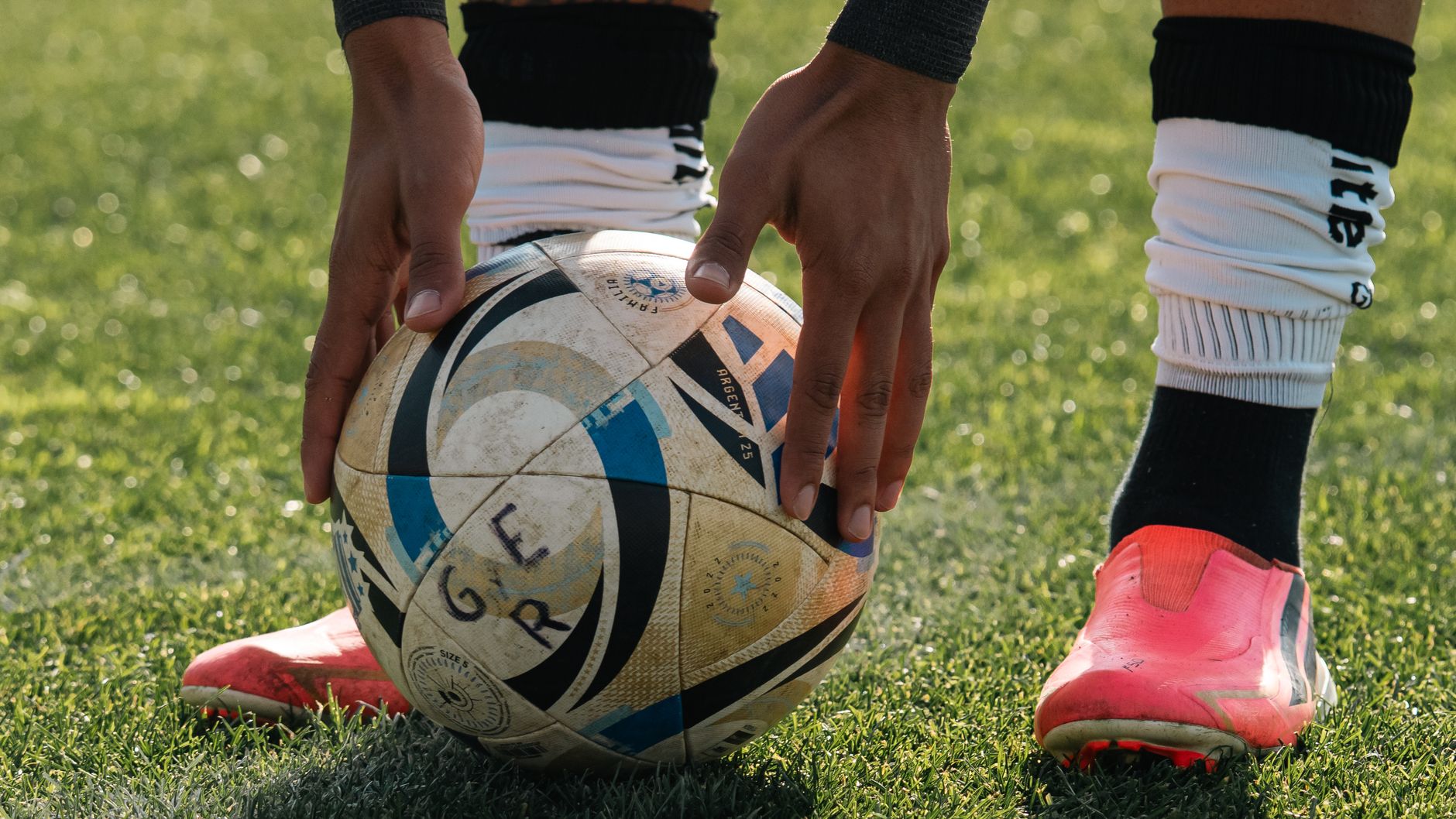
Photo by Mateo Franciosi on Pexels
Round 3: How Do Comfort, Control, and Price Compare?
Comfort, control, and price should be ranked by training frequency: players practicing once weekly need reliable value, while players training four or more times weekly may justify stronger materials and better cushioning. The Nike Premier 3 and adidas Copa Pure 3 League favor touch and comfort, whereas the Nike Mercurial Vapor 16 Academy and Puma Future 8 Play emphasize lighter movement and responsive lockdown.
A first pair should usually sit in the budget-to-mid-range tier, roughly $60–$130 in the United States before discounts. Elite boots can exceed $250, but beginners rarely receive proportional benefit because technical execution, conditioning, and fit dominate early performance. The adidas Predator League may help players who enjoy shooting drills through its textured strike areas, but those zones do not replace clean body positioning. Similarly, the Nike Phantom GX 2 Academy offers a broad contact area for passing and receiving, yet it will not repair a poor first touch. The boot is equipment, not an unpaid assistant coach.
For durability, consider training volume and rotation. A player attending two 90-minute sessions plus one match each week places approximately 4.5 hours of demand on the upper and soleplate, before warm-ups and wet-weather use. One specific edge case deserves attention: if a boot already creates a hot spot during a 15-minute indoor fitting, do not buy it for a full 90-minute match on the assumption that thicker socks will solve the issue. Thick socks can increase compression, heat, and friction. Instead, test the model with the exact sock thickness and insoles you plan to use.
[Internal Link: football boot maintenance and cleaning tips]
For a broader tournament perspective, Football Compass also tracks how professional players select footwear for grass, weather, and tactical roles. Their choices are interesting; copying them blindly is less intelligent than it looks.
The Final Score & Who Should Pick What
The Nike Premier 3 is the strongest all-round recommendation for beginners who want reliable comfort, traditional touch, and sensible value. The adidas Copa Pure 3 League is a better match for players who prefer padded contact and a softer feel, while the Puma Future 8 Play suits wider feet and players who want flexible movement. Choose the Nike Mercurial Vapor 16 Academy if speed-oriented design matters and the fit is genuinely secure.
My final ranking is:
- Best overall value: Nike Premier 3.
- Best comfort-focused option: adidas Copa Pure 3 League.
- Best for wider feet: Puma Future 8 Play.
- Best speed-oriented option: Nike Mercurial Vapor 16 Academy.
- Best for shooting practice: adidas Predator League.
- Best for passing and control: Nike Phantom GX 2 Academy.
The winning formula is not complicated: correct surface, secure fit, manageable price, and enough comfort for the full session. For youth players, check league regulations before ordering; for adults, check the return policy and test indoors on a clean floor. Keep the receipt until the heel, tongue, toe box, and soleplate have survived at least one realistic training session. That boring process prevents the classic beginner move: discovering the cleat problem during the first match, approximately 12 minutes after kickoff.

Photo by Omar Ramadan on Pexels
Want to compare tournament footwear, player roles, and training conditions next?
Frequently Asked Questions
Q: What are football cleats for beginners?
A: Football cleats for beginners are entry-level boots designed to provide secure traction, comfort, and basic ball control without requiring premium technology. Models such as the Nike Premier 3, adidas Copa Pure 3 League, and Puma Future 8 Play are suitable starting points because they balance fit, durability, and price. Beginners should select the soleplate according to the field surface and confirm that the footwear is permitted by the relevant league. The most expensive model is not automatically the safest or most suitable option.
Q: How do you choose the right size football cleat?
A: Choose the size that holds your heel and midfoot securely while leaving approximately 5–10 millimeters beyond the longest toe. Measure both feet late in the day while wearing football socks, then test walking, jogging, stopping, and lateral movement. Your toes should not be crushed, but excessive empty space allows sliding and can cause blisters. If one foot is larger, fit the larger foot and use lacing or an insole to improve security on the smaller side.
Q: What is the difference between FG, AG, and TF football cleats?
A: FG cleats are primarily for natural firm grass, AG cleats are designed for artificial grass, and TF shoes use many short rubber nubs for turf pitches. FG soles often have roughly 10–12 molded studs, while AG designs generally spread pressure through shorter and more numerous studs. TF shoes are not ideal replacements for full-length grass cleats. Always check the facility’s footwear rules because field operators and youth leagues may restrict certain stud patterns.
Q: Are expensive football cleats worth it for beginners?
A: Expensive football cleats are usually not worth the additional cost for most beginners. Academy and league models commonly provide the necessary traction and stability for approximately $60–$130 in the United States, while elite boots can exceed $250. Premium models may reduce weight or add specialized materials, but those advantages are limited if the fit is poor. Spend first on correct sizing, suitable surface traction, and a return policy rather than celebrity branding.
Q: Why do new football cleats cause blisters?
A: New football cleats cause blisters when friction develops from heel lift, excessive tightness, moisture, or poorly matched socks. A practical solution is to wear the boots for 15–20 minutes during low-intensity sessions before using them in a match, while checking for hot spots afterward. Do not force a boot that creates immediate pain, because synthetic uppers may soften slightly but structural pressure points often remain. Keep feet dry and use the same socks intended for competition.
Q: Can beginners use football cleats on artificial turf?
A: Beginners can use football cleats on artificial turf only when the soleplate is approved for that surface. AG cleats are generally the safer option for modern artificial grass, while TF shoes are better for short, dense turf used in small-sided facilities. FG cleats may feel too aggressive on some synthetic pitches and can concentrate pressure beneath the foot. Ask the facility manager whether the surface requires AG, MG, or TF footwear before buying.
Q: How should beginners clean and store football cleats?
A: Clean beginner football cleats with cool water, a soft brush, and air drying away from direct heat. Remove mud and rubber pellets after every session, then loosen the laces so the upper can dry evenly. Avoid washing machines, radiators, hair dryers, and prolonged storage in a sealed bag because heat and trapped moisture can damage adhesives and materials. If the soleplate develops cracks or a stud becomes loose, stop using the pair until it has been inspected or replaced.
To keep tracking player equipment, match conditions, and 2026 FIFA World Cup developments in one place, visit Football Compass and explore the latest coverage.